Solution:
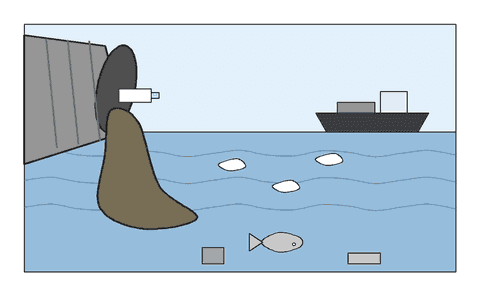
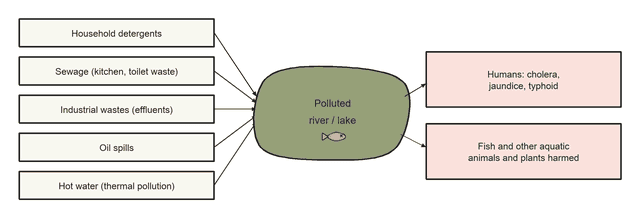
Concept: The picture shows a drain pipe pouring dirty waste water and a plastic bottle into the sea, litter floating on the water and waste lying on the sea bed. Water pollution is any change in the quality of water that makes it unfit for humans and other living things. Its five major sources are household detergents, sewage, industrial wastes (effluents), oil spills and hot water from power plants (thermal pollution).
Step 1 — (i) Identify the type of pollution.
Wastes poured into the sea spoil the water, so this is water pollution.
Step 2 — (ii) Name one pollutant.
One pollutant is sewage; untreated industrial effluents from drains are another. Plastic waste, detergents and oil are also water pollutants.
Step 3 — (iii) State the impact on human health.
Water polluted by sewage spreads diseases such as cholera, typhoid and jaundice (hepatitis). Toxic chemicals in it can also reach us through fish and other sea food.
Step 4 — (iv) State one measure to control it.
Set up sewage treatment plants and treat industrial effluents before they are discharged into water bodies. Not throwing plastics and food waste into drains also helps.
Step 5 — (v) Explain 'pollutant'.
A pollutant is any substance or form of energy which, when added to air, water or land, spoils the natural quality of the environment. Pollution is the change; the pollutant is what causes it, for example sewage in water.
Watch out: Part (ii) asks for a pollutant (a substance), not the type of pollution.
Therefore, (i) water pollution; (ii) sewage (or industrial effluent); (iii) diseases such as cholera, typhoid and jaundice; (iv) treat sewage and effluents before discharge; (v) a pollutant is anything added to the environment that spoils its natural quality.