Solution:
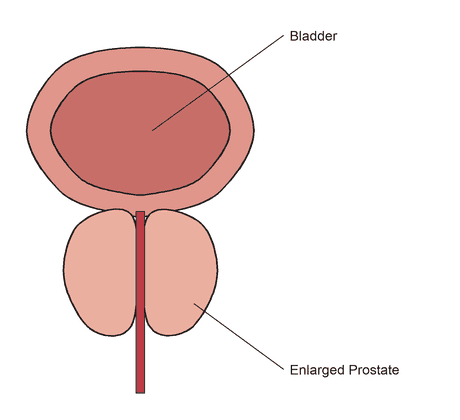
Concept: The male accessory glands are the seminal vesicles, the prostate gland and Cowper's (bulbo-urethral) glands. Their secretions mix with the sperms to form semen. The prostate gland surrounds the urethra just below the urinary bladder, and in the ICSE book its secretion is the alkaline one that neutralises acidity. Urine leaving the bladder is held back by a ring of muscle at the bladder's neck.
Step 1 — Part (a) — location of the prostate.
The prostate gland surrounds the urethra close to its origin from the urinary bladder, just below the bladder.
Step 2 — Part (b) — why its secretion is alkaline.
Its alkaline secretion is added to the semen in the urethra. It neutralises the acid in the female vagina (and any acid left from urine in the urethra), so the sperms stay alive and active.
Step 3 — Part (c) — structure that controls the flow of urine.
A ring of muscle, the sphincter (urethral sphincter), at the neck of the bladder stays closed to hold urine in and relaxes to let it pass into the urethra.

Because the prostate lies right against this region, its surgery can weaken the sphincter, which explains the leakage of urine.
Watch out: The sphincter is a ring of muscle at the bladder neck, not the prostate itself.
Therefore, (a) the prostate surrounds the urethra just below the bladder, (b) its alkaline secretion neutralises the acid in the vagina so the sperms survive, and (c) the flow of urine is regulated by the sphincter.