
Opening your dashboard
Class 12 Physics Chapter 13 Electromagnetic Waves: Practice Questions
106 questions on Chapter 13, each worked through on its own page with the AI tutor. Class 12 Physics, ICSE 2026-27.
106 questions
1–3 marks · Mixed difficulty
- 11 mark
Question 1
The electric flux through a surface in empty space changes with time as , where is in and in seconds. The displacement current through the surface at is (take ; hypothetical data)
- 23 marks
Question 2
A parallel-plate capacitor has circular plates of radius with air between them. It is being charged by a steady current of in the connecting wires. Assume the electric field is uniform between the plates and zero outside them. (Hypothetical data.)
(i) Find the rate at which the electric field between the plates is increasing.
(ii) Using the Ampère–Maxwell law, find the magnetic field at a point in the gap, from the axis of the plates. Compare it with the field from a long straight lead wire carrying the same current.
(iii) What would Ampère's original law predict for the point in (ii)?
(Take , .)
- 31 mark
Question 3
A capacitor is connected to a battery through a resistor. After a long time the capacitor is fully charged. Which statement about the currents is now correct?
- 42 marks
Question 4
The space between the plates of a capacitor, each of area , is filled with mica of dielectric constant . At a certain instant the electric field in the mica is increasing at . (Hypothetical data.)
(i) Find the displacement current density in the mica.
(ii) Find the displacement current, and the conduction current in the connecting wires at that instant.
(Take .)
- 51 mark
Question 5
An alternating voltage of amplitude and frequency is applied across a capacitor. The displacement current between its plates has amplitude . If the frequency is made and the voltage amplitude is made , the new amplitude of the displacement current is
- 62 marks
Question 6
A capacitor is being charged by a current . A circular loop surrounds one of the connecting wires near the plate. Two surfaces have as their boundary: is a flat disc that the wire passes through, and is a bag-shaped surface that passes between the plates without touching the wire.
(i) Show that Ampère's circuital law gives two different answers for the same loop .
(ii) Explain how Maxwell's correction removes the contradiction.
- 73 marks
Question 7
A parallel-plate capacitor with circular plates of radius is being charged by a constant current . Assume the electric field between the plates is uniform and zero outside them.
(i) Use the Ampère–Maxwell law to find the magnetic field in the gap at a distance from the axis, for (a) and (b) .
(ii) Describe how varies as increases from , and state where it is greatest.
- 83 marks
Question 8
An air-filled parallel-plate capacitor with plates of area is charged, starting from zero, by a constant current of . (Hypothetical data.)
(i) At what rate does the electric flux through the gap change?
(ii) At what rate does the electric field between the plates increase?
(iii) How long does the field take to reach ?
(Take .)
- 91 mark
Question 9
Which pair of effects, taken together, makes it possible for an electromagnetic disturbance to travel through empty space by itself?
- 101 mark
Question 10
The oscillating current in an circuit with and is fed to an antenna. The wavelength of the electromagnetic waves radiated is (take )
- 111 mark
Question 11
A parallel-plate capacitor with circular plates of radius is being charged by a current . A circular loop of radius lies in the gap, coaxial with the plates. Assuming a uniform field between the plates, the value of round this loop is
- 122 marks
Question 12
Consider a region of empty space with no charges and no currents.
(i) Using Ampère's law without Maxwell's correction, what is the only possible source of a magnetic field in this region? What does Faraday's law give as a source of an electric field there?
(ii) Explain why electromagnetic waves could not have been predicted from these laws, and how Maxwell's correction made the prediction possible.
- 131 mark
Question 13
Maxwell's prediction of electromagnetic waves was first confirmed experimentally by
- 142 marks
Question 14
Name the equation of electromagnetism (one of Maxwell's equations) that expresses each statement below, and write the equation in integral form.
(a) Magnetic field lines are closed loops; no isolated magnetic pole has ever been found.
(b) A changing magnetic flux through a loop produces a circulating electric field (an emf) round the loop.
(c) The total electric flux out of a closed surface depends only on the charge enclosed.
(d) Both currents and changing electric flux produce a circulating magnetic field.
- 151 mark
Question 15
For a plane electromagnetic wave travelling in vacuum, which one of the following statements is incorrect?
- 163 marks
Question 16
A broadcasting station uses a vertical transmitting rod (dipole) whose length is half the wavelength it radiates. It transmits at . A receiver is far away, due east of the station, at the same height.
(i) Find the length of the transmitting rod.
(ii) At the receiver, along which line does the electric field oscillate, and along which line does the magnetic field oscillate? At an instant when there points vertically upwards, which way does point?
(iii) Should the receiving rod be vertical or horizontal? What happens if it is laid horizontally along the north–south line? Relate your answer to the transverse nature of the waves.
(Take .)
- 171 mark
Question 17
A plane electromagnetic wave travels in vacuum in the direction of . Its electric field oscillates in the -plane. Along which lines do the electric and magnetic fields of the wave oscillate?
- 182 marks
Question 18
A plane electromagnetic wave travelling along strikes a flat metal mirror at normal incidence. At the mirror, the incident wave has along and along . On reflection, the electric vector suffers a phase change of , while the magnetic vector does not.
(i) Write the directions of and of the reflected wave at the mirror at that instant.
(ii) Show that these directions are consistent with the reflected wave travelling back along .
- 193 marks
Question 19
A plane electromagnetic wave of wavelength travels in vacuum along . At its electric field is
(Hypothetical data.)
(i) Find the magnetic field (magnitude and direction) at at , and .
(ii) Find the frequency of the wave. At what position between and is a maximum along a quarter period later?
(Take .)
- 201 mark
Question 20
A plane electromagnetic wave travels in vacuum along the direction. Which of the following could be its electric and magnetic fields at one point at the same instant? (Take .)
- 211 mark
Question 21
A plane electromagnetic wave travels in vacuum along the direction. Which of the following quantities is necessarily zero at every point and every instant?
- 222 marks
Question 22
A live television picture is sent from a studio up to a geostationary satellite above the earth, and the satellite sends it straight back down to a viewer. Take both the studio and the viewer to be almost directly below the satellite.
(a) How long after an event in the studio does the viewer see it?
(b) The signal is carried by microwaves. Would the delay be shorter if the link used a laser beam (visible light) instead? Give a reason.
- 231 mark
Question 23
Light travels through a non-magnetic glass of refractive index . The amplitude of its electric field in the glass is . The amplitude of its magnetic field in the glass is
- 243 marks
Question 24
An electron moves with a steady speed of in a circle at right angles to a uniform magnetic field of in an evacuated tube. (, .)
(a) Its speed does not change. Explain why it still gives out electromagnetic waves.
(b) Find the frequency of the waves it gives out.
(c) Find their wavelength, and name the part of the electromagnetic spectrum they belong to.
(Hypothetical data.)
- 253 marks
Question 25
A light pulse takes to travel along a straight optical fibre long. The fibre carries a signal of wavelength (measured in vacuum).
(a) Find the speed of light in the fibre core.
(b) Find the refractive index of the core.
(c) Find the frequency and the wavelength of the signal inside the core.
(Hypothetical data. Treat the pulse as travelling at the wave speed in the core.)
- 261 mark
Question 26
Light of a certain colour travels through pure water at . Water is non-magnetic (). The relative permittivity of water at the frequency of this light is
- 272 marks
Question 27
An electron moves at at right angles to the magnetic field of a light wave in vacuum. The amplitude of the electric field of the wave is .
(a) Show that the largest magnetic force on the electron is only times the largest electric force on it, and find this ratio.
(b) Use your result to explain why the electric vector is called the light vector.
- 281 mark
Question 28
Two light pulses leave a source at the same instant. One passes through a glass block long (refractive index ) and the other through a tank of water long (refractive index ); the rest of their paths are the same. Take the speed of a pulse in a medium of refractive index as , with . The pulse through the water comes out earlier by
- 293 marks
Question 29
A space probe carries a flat, perfectly reflecting solar sail of area (). The total mass of the probe and sail is . Near the earth, sunlight of intensity falls normally on the sail.
(a) Find the radiation pressure on the sail.
(b) Find the force on the sail and the acceleration of the probe.
(c) Starting from rest, what speed would the probe gain in one day () if this force stayed constant? Ignore gravity.
(Hypothetical data.)
- 301 mark
Question 30
A beam of intensity falls normally on a flat panel. The panel reflects of the energy straight back and absorbs the rest. The radiation pressure on the panel is (Hypothetical data.)
- 313 marks
Question 31
A laser gives a parallel beam of circular cross-section, in diameter, in air (take the speed of light as ).
(a) Find the intensity of the beam.
(b) Find the average energy density in the beam.
(c) How much energy is contained in a length of the beam? Show that this equals the power multiplied by the time light takes to travel .
(Hypothetical data.)
- 321 mark
Question 32
In a plane electromagnetic wave in vacuum, the average energy density of the magnetic field is . The average energy density of the electric field and the intensity of the wave are
- 331 mark
Question 33
A small lamp radiates light equally in all directions. At from it, the amplitude of the electric field of the light is . At from the lamp, the amplitude is
- 343 marks
Question 34
(a) In a plane electromagnetic wave in vacuum, at every point and instant. Using , show that the electric energy density is always equal to the magnetic energy density .
(b) At a certain point and instant in such a wave, . Find there and the total energy density at that point and instant.
(.)
- 353 marks
Question 35
The intensity of sunlight just outside the earth's atmosphere is . The earth is from the sun and Mars is from it. Treat the sun as a point source radiating equally in all directions. (.)
(a) Find the total power radiated by the sun.
(b) Find the intensity of sunlight at Mars.
(c) Find the amplitude of the electric field of sunlight at Mars.
- 363 marks
Question 36
In a microwave oven, of microwave power is absorbed by of water in a cup. (Specific heat capacity of water .)
(a) How long does it take to heat the water from to ?
(b) How much momentum do the absorbed microwaves deliver to the water in this time?
(c) Why does the cup not visibly move?
(Hypothetical data.)
- 371 mark
Question 37
A torch floating in space sends out of light, all in one narrow beam. The force with which the torch is pushed backwards is (Hypothetical data.)
- 381 mark
Question 38
Match each source in List I with the radiation it mainly produces in List II.
List I: 1. a klystron tube; 2. the nucleus of a radioactive atom; 3. high-speed electrons stopped by a metal target; 4. an electronic oscillator feeding a tall broadcasting mast.
List II: P. X-rays; Q. radio waves; R. microwaves; S. gamma rays.
- 392 marks
Question 39
The remote control of a television has a small LED that gives out radiation of wavelength . When a button is pressed, the eye sees nothing, but the LED appears to flash when viewed through a mobile phone camera.
(a) Find the frequency of the radiation and name the part of the electromagnetic spectrum it belongs to.
(b) Why does the camera show the flash when the eye cannot?
- 401 mark
Question 40
Surgical gloves and syringes are sterilised after they have been packed and sealed in cardboard cartons. The radiation used for this is
- 413 marks
Question 41
A green laser pointer gives light of wavelength and a red one gives (both in air).
(a) Find the frequency of each, and check that each lies in the range given for its colour in the visible spectrum (green: to ; red: to ).
(b) The green beam enters water of refractive index . Find its frequency and wavelength in the water.
(c) A diver under the water notices that this wavelength is that of violet light in air. Does the diver see the beam as violet? Explain.
- 422 marks
Question 42
A person sits indoors behind a closed glass window in strong sunlight for an hour. Their skin feels warm, but they hardly get sunburnt. Explain both observations in terms of the parts of the electromagnetic spectrum in sunlight.
- 431 mark
Question 43
Which of the following radiations is not given out by electrons changing their energy in atoms, but comes from the nucleus?
- 443 marks
Question 44
The radio part of the spectrum is divided into bands by wavelength: UHF to , VHF to , HF to , MF to , LF to and VLF to .
Find the wavelength of each transmission below and name its band.
(a) A walkie-talkie working at .
(b) A ship's distress radio working at .
(c) A station that signals to submarines at .
- 453 marks
Question 45
A laboratory receives three sources of electromagnetic radiation, of frequencies
(a) ,
(b) ,
(c) .
For each, find the wavelength, name the part of the electromagnetic spectrum it belongs to, and name one detector that could be used for it.
(Hypothetical data.)
- 461 mark
Question 46
Inside the glass of a fluorescent tube light there is a white coating. When the tube is switched on, this coating
- 471 mark
Question 47
Optical and radio telescopes are built on the ground but, X-ray astronomy is possible only from satellites orbiting the Earth. Why?
- 481 mark
Question 48
What is the S.I. unit of displacement current?
- 492 marks
Question 49
Give the dimension of the expression .
- 502 marks
Question 50
Radio waves diffract around buildings while light waves, even though electromagnetic, do not. Why?
- 511 mark
Question 51
The charging current for a capacitor is 0.25 A. What is the displacement current across the plates?
- 523 marks
Question 52
A certain radio station broadcasts at a frequency of 600 kHz. What is the wavelength of the radio wave?
- 533 marks
Question 53
Vividh Bharati broadcasts at 25 m band. What is the frequency of the broadcast?
- 542 marks
Question 54
Name any two properties which are common to all parts of electromagnetic spectrum.
- 552 marks
Question 55
State any five electromagnetic waves in increasing order of penetration.
- 561 mark
Question 56
Microwaves, X-rays, UV rays, infrared rays
Which of the above electromagnetic waves has:
(i) the shortest wavelength
(ii) the lowest frequency
- 572 marks
Question 57
Mention any four uses/applications of satellite communication.
- 581 mark
Question 58
How are the electric vector and the magnetic vector and velocity vector oriented in an electromagnetic wave?
- 592 marks
Question 59
Name any two electromagnetic waves. State any similarity and one difference between them.
- 601 mark
Question 60
Mention any two uses of geostationary satellites.
- 612 marks
Question 61
Draw a sketch of electromagnetic spectrum showing the relative position of UV, IR, X-rays and microwaves with respect to visible light.
- 622 marks
Question 62
Describe very briefly any four regions of electromagnetic spectrum mentioning their spectral properties.
- 631 mark
Question 63
Radio waves and gamma rays both are transverse in nature and electromagnetic in character and have the same speed in vacuum. In what respects are they different?
- 641 mark
Question 64
What is the speed of gamma rays to that of radio waves in vacuum?
- 651 mark
Question 65
A plane electromagnetic wave travels in free space along -axis. At a particular point in space, the electric field along -axis is . The magnetic induction (B) along -axis is
- 661 mark
Question 66
Which one of the following is the property of a monochromatic, plane electromagnetic wave in free space?
- 671 mark
Question 67
The average electric field of electromagnetic waves in certain region of free space is . Then the average field in the same region is of the order of
- 681 mark
Question 68
Which of the following has/have zero average value in a plane electromagnetic wave?
- 691 mark
Question 69
An electromagnetic wave of frequency MHz passes from vacuum into a dielectric medium with relative permittivity . Then
- 701 mark
Question 70
Frequency of a wave is Hz. The wave is
- 711 mark
Question 71
An electromagnetic wave, going through vacuum is described by . Which of the following is independent of wavelength?
- 721 mark
Question 72
Electromagnetic waves travel in a medium which has relative permeability and relative permittivity . Then the speed of the electromagnetic wave in the medium will be
- 731 mark
Question 73
If , and represent the wavelength of visible light X-rays and microwaves respectively, then
- 741 mark
Question 74
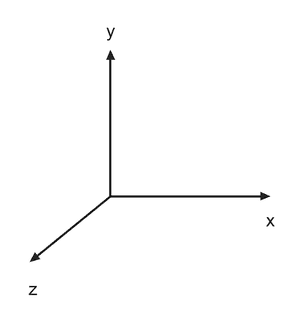
Light wave is travelling along -direction. If the corresponding vector at any time is along the -axis, the direction of vector at that time is along
- 751 mark
Question 75
If c is the speed of electromagnetic waves in vacuum, its speed in a medium of dielectric constant k and relative permeability is
- 761 mark
Question 76
The rms value of the electric field of the light coming from the Sun is N/C. The average total energy density of the electromagnetic wave is
- 771 mark
Question 77
Light waves travel in vacuum along the -axis. Which of the following may represent the wavefront?
- 781 mark
Question 78
A new system of units is evolved in which the values of and are and respectively. Then the speed of light in this system will be
- 791 mark
Question 79
The magnetic field amplitude of an electromagnetic wave is T. Its electric field amplitude if the wave is travelling in free space is
- 801 mark
Question 80
All components of the electromagnetic spectrum in vacuum have the same
- 811 mark
Question 81
The electric field of an electromagnetic wave in free space is given by V/m, where and are in seconds and metres respectively. It can be inferred that
(1) The wavelength is m.
(2) The wave number is rad/m.
(3) The wave amplitude is V/m.
(4) The wave is propagating along direction.
Which one of the following pairs of statement is correct?
- 821 mark
Question 82
The magnetic field in a plane electromagnetic wave is given by
- 831 mark
Question 83
If the total electromagnetic energy falling on a surface is , then the total momentum delivered (for complete absorption) is
- 841 mark
Question 84
In an electromagnetic wave in free space, the root mean square value of the electric field is V/m. The peak value of the magnetic field is
- 851 mark
Question 85
An e.m. wave from air enters a medium. The electric fields are in air and in medium, where the wave number and frequency refer to their values in air. The medium is non-magnetic. If and refer to relative permittivity of air and medium respectively, which of the following options is correct?
- 861 mark
Question 86
A plane electromagnetic wave of frequency MHz travels in free space along the positive -direction. At a particular point in space and time, V/m. The corresponding magnetic field , at that point will be
- 871 mark
Question 87
A mW laser beam has a cross-sectional area of . The magnitude of the maximum electric field in this electromagnetic wave is given by (given permittivity of space SI units, speed of light m/s)
- 881 mark
Question 88
A plane electromagnetic wave travels in free space along the -direction. The electric field component of the wave at a particular point of space and time is along -direction. Its corresponding magnetic field component B would be
- 891 mark
Question 89
The magnetic field of an electromagnetic wave is given by . The associated electric field will be
- 901 mark
Question 90
A plane electromagnetic wave having a frequency GHz propagates along the positive -direction in free space. The peak value of the electric field is V/m. Which among the following is the acceptable magnetic field component in the electromagnetic wave?
- 911 mark
Question 91
If the magnetic field in a plane electromagnetic wave is given by , then what will be expression for electric field?
- 921 mark
Question 92
A plane electromagnetic wave of frequency GHz is propagating in vacuum along the -direction. At a particular point in space and time, the magnetic field is given by T. The corresponding electric field is (speed of light )
- 931 mark
Question 93
A plane electromagnetic wave has frequency of Hz and its energy density is in vacuum. The amplitude of the magnetic field of the wave is close to and speed of light
- 941 mark
Question 94
In plane electromagnetic wave, the directions of electric field and magnetic field are represented by and , respectively. What is the unit vector along direction of propagation of the wave?
- 951 mark
Question 95
The magnetic field of a plane electromagnetic wave is T, where is the speed of light. The corresponding electric field is
- 961 mark
Question 96
The electric field of a plane electromagnetic wave propagating along the direction in vacuum is . The magnetic field , at the moment is
- 971 mark
Question 97
The correct match between the entries in column I and column II are
I Radiation II Wavelength A Microwaves (i) m B Gamma rays (ii) m C A.M. radio (iii) m D X-rays (iv) m - 981 mark
Question 98
The ratio of contributions made the electric field and magnetic field components to the intensity of electromagnetic wave is ( = speed of electromagnetic waves)
- 991 mark
Question 99
A plane electromagnetic wave of frequency MHz is travelling in vacuum along -direction. At a particular point in space and time, T. The value of electric field at this point is (speed of light m/s, assume , , are unit vectors along , and direction)
- 1001 mark
Question 100
A plane electromagnetic wave of frequency MHz is travelling in vacuum along the -direction. At particular point in space and time, T (where is unit vector along -direction), what is at this point?
- 1011 mark
Question 101
A linearly polarised electromagnetic wave in vacuum is N/C is incident normally on a perfectly reflecting wall at . Choose the correct option.
- 1021 mark
Question 102
Electric field of a plane electromagnetic wave propagating through a non-magnetic medium is given by V/m. The dielectric constant of the medium is equal to (take )
- 1031 mark
Question 103
Light beam is described by . An electron is allowed to move normal to the propagation of light beam with a speed of m/s. What is the maximum magnetic force exerted on the electron?
- 1041 mark
Question 104
Radio waves and gamma waves are both transverse in nature and electromagnetic in character and have the same speed in vacuum. In what respects are they different?
- 1051 mark
Question 105
Which of the following groups belongs only to the electromagnetic spectrum?
- 1061 mark
Question 106
Which electromagnetic radiation has wavelength greater than that of X-rays and smaller than that of visible light?