
Opening your dashboard
Class 12 Chemistry Chapter 9 Coordination Compounds: Practice Questions
134 questions on Chapter 9, each worked through on its own page with the AI tutor. Class 12 Chemistry, ICSE 2026-27.
134 questions
1–4 marks · Mixed difficulty
- 11 mark
Question 1
In which of the following coordination entities is the central metal in the +2 oxidation state?
- 22 marks
Question 2
Ferric alum, , and potassium ferricyanide, , both contain iron in the +3 state. A few drops of potassium thiocyanate solution are added to a dilute aqueous solution of each.
Predict which solution turns blood-red, and explain the difference in terms of the nature of the two compounds.
- 32 marks
Question 3
Silver chloride dissolves in aqueous ammonia because the complex ion is formed.
(a) In this complex ion, identify the Lewis acid, the Lewis base and the donor atom.
(b) Name the type of bond between silver and the ligand, and state the coordination number of silver.
- 44 marks
Question 4
For the coordination compound , state
(a) the coordination entity and its charge,
(b) the oxidation number of cobalt,
(c) the coordination number of cobalt, and
(d) the total number of ions given by one formula unit in aqueous solution.
- 52 marks
Question 5
A complex ion of iron(III) has coordination number 6. Its only ligands are cyanide ions and water molecules, and the overall charge on the ion is −2.
Find the number of each ligand and write the formula of the complex ion.
- 61 mark
Question 6
Platinum forms the compound . According to Werner's theory, what are the primary valency and the secondary valency of platinum in it?
- 71 mark
Question 7
Which statement about the secondary valency of a metal in Werner's theory is correct?
- 83 marks
Question 8
Rhodium(III) chloride forms an ammine compound with empirical formula , in which rhodium has coordination number 6. A 0.010 mol kg⁻¹ aqueous solution of the compound freezes at −0.0558 °C. ( of water = 1.86 K kg mol⁻¹; assume complete ionisation.)
(a) Calculate the van't Hoff factor, , of the compound.
(b) Write the Werner formula of the compound.
(c) State how many chloride ions satisfy only the primary valency.
- 91 mark
Question 9
In which pair do the two compounds have the same secondary valency but different primary valencies of the metal?
- 101 mark
Question 10
What is the coordination number of iron in ?
- 113 marks
Question 11
Diethylenetriamine (dien) is the neutral molecule .
(a) State its denticity and name its donor atoms.
(b) Write the formula and charge of the complex ion formed when two dien molecules bind one ion, and state the coordination number of cobalt.
(c) How many chelate rings does one dien molecule form, and how many atoms are in each ring?
- 121 mark
Question 12
Which of the following cannot act as a ligand?
- 132 marks
Question 13
The acetylacetonate ion, (acac⁻), binds a metal ion through both of its oxygen atoms.
(a) State the denticity of acac⁻ and the number of atoms in the ring it forms with the metal.
(b) Write the formula of the complex formed by with three acac⁻ ions, and state its charge and the coordination number of iron.
- 141 mark
Question 14
How many chelate rings are present in the complex ion , and what is the size of each ring? (en = ethane-1,2-diamine)
- 151 mark
Question 15
What is the IUPAC name of , in which the nitrite ion is bonded through nitrogen?
- 162 marks
Question 16
Write the IUPAC names of
(a)
(b) (en = ethane-1,2-diamine)
- 172 marks
Question 17
Write the formulae of
(a) amminebromidochloridonitrito-N-platinate(II) ion
(b) dichloridobis(triphenylphosphine)nickel(II)
- 181 mark
Question 18
Which formula is matched with its correct IUPAC name?
- 193 marks
Question 19
A student wrote the following names. Point out the error in each and write the correct IUPAC name.
(a) : dichloridotetraaquairon(III) chloride
(b) : potassium hexacyanidochromium(III)
(c) : tetracarbonylnickel(II)
- 201 mark
Question 20
How many geometrical isomers are possible for the octahedral complex ?
- 212 marks
Question 21
The glycinate ion, (gly⁻), binds a metal through its N atom and one O atom. Platinum(II) forms the square planar complex .
Explain why this complex exists as two geometrical isomers, and state how the donor atoms are placed in each.
- 221 mark
Question 22
Which test could distinguish the linkage isomers (bonded through N) and (bonded through O)?
- 232 marks
Question 23
The square planar compound (PEt₃ = triethylphosphine) is obtained as two isomers. One of them has a large dipole moment and the other has a dipole moment of zero.
Identify each isomer, giving a reason.
- 241 mark
Question 24
According to valence bond theory, the hybridisation and shape of the diamminesilver(I) ion, , are
- 253 marks
Question 25
For the complex (Cr = 24):
(a) Find the oxidation state of chromium and write its 3d electron configuration in the complex.
(b) Using valence bond theory, state the hybridisation and geometry, and say whether it is an inner or an outer orbital complex.
(c) Calculate the spin-only magnetic moment, and explain why , which has a much weaker field ligand, has the same value.
- 261 mark
Question 26
The complex ion (Pd = 46) is found to be diamagnetic. Its geometry and the hybridisation of palladium are
- 272 marks
Question 27
The tetrabromidocobaltate(II) ion, , is paramagnetic, with a spin-only magnetic moment of 3.87 BM. (Co = 27)
(a) How many unpaired electrons does the ion have?
(b) State the hybridisation of cobalt and the shape of the ion.
- 281 mark
Question 28
Which one of the following observations can valence bond theory not explain?
- 293 marks
Question 29
Bis(dimethylglyoximato)nickel(II), the red precipitate of the nickel test, is diamagnetic. The hexaaquanickel(II) ion, , has two unpaired electrons. (Ni = 28)
(a) Give the hybridisation and shape of nickel in each complex.
(b) Show that, according to valence bond theory, every octahedral nickel(II) complex must be an outer orbital complex with two unpaired electrons, whatever the ligand.
- 301 mark
Question 30
Which pair of complex ions has the same spin-only magnetic moment? (Cr = 24, Mn = 25, Fe = 26, Ni = 28, Cu = 29, Zn = 30)
- 311 mark
Question 31
An octahedral complex of a metal ion has a crystal field stabilisation energy of (P = pairing energy). The ion and its spin state are
- 323 marks
Question 32
The purple ion absorbs light most strongly at 498 nm, due to the single d–d transition .
(a) Calculate the crystal field splitting energy in kJ mol⁻¹.
(b) Hence find the crystal field stabilisation energy of the ion.
( = 6.626 × 10⁻³⁴ J s, = 3.0 × 10⁸ m s⁻¹, = 6.022 × 10²³ mol⁻¹)
- 331 mark
Question 33
Which of the following octahedral ions has the largest crystal field splitting energy, ?
- 342 marks
Question 34
An aqueous solution of copper(II) sulphate is blue because of the ion, but potassium tetracyanidocuprate(I), , is colourless. Explain this difference using crystal field theory. (Cu = 29)
- 352 marks
Question 35
(a) Give two reasons why tetrahedral complexes are almost always high spin.
(b) How many unpaired electrons does a metal ion have in a tetrahedral complex?
- 362 marks
Question 36
is violet, while is yellow. Which of the two ions absorbs light of higher energy (shorter wavelength)? Explain your answer using the spectrochemical series.
- 371 mark
Question 37
For which one of the following metal ions is there no choice between a high spin and a low spin arrangement in an octahedral complex?
- 383 marks
Question 38
(a) Calculate the crystal field stabilisation energy of a ion in an octahedral field and in a tetrahedral field. Express both in terms of , taking .
(b) Use your answers to explain why chromium(III) complexes are octahedral.
- 391 mark
Question 39
A solution of a coordination compound absorbs mainly red light from white light. The colour of the solution appears
- 401 mark
Question 40
In the metal–carbon bond of a metal carbonyl, the metal donates electrons back to the CO ligand. These electrons enter
- 413 marks
Question 41
(a) Using the effective atomic number (EAN) rule, predict the number of CO groups in the simplest stable mononuclear carbonyls of nickel (Z = 28) and iron (Z = 26).
(b) Manganese (Z = 25) does not form a stable molecule but forms . Explain using the EAN rule.
- 421 mark
Question 42
Which one of the following ligands bonds to a metal only through σ donation and cannot accept back donation from the metal?
- 433 marks
Question 43
Carbon monoxide is a very weak Lewis base towards or , yet it forms very stable compounds with metals in the zero oxidation state, such as . Explain why.
- 443 marks
Question 44
A 100 mL sample of hard water needs 12.0 mL of 0.0100 M disodium EDTA solution () for titration with Eriochrome black-T as indicator. Calculate the total hardness of the water in ppm, expressed as (molar mass 100 g mol⁻¹). (Hypothetical data.)
- 451 mark
Question 45
In the cyanide process, gold dissolves in aqueous potassium cyanide in the presence of air and is then recovered by adding zinc. Which statement about the process is correct?
- 462 marks
Question 46
In black-and-white photography, the developed film is washed with hypo solution, which dissolves the silver bromide that was not exposed to light.
(a) Write the balanced equation for the reaction.
(b) State the oxidation state and the coordination number of silver in the complex formed.
- 472 marks
Question 47
Many metals needed by living organisms are present in them as coordination compounds rather than as simple metal ions. Give two reasons for this, with one example for each.
- 481 mark
Question 48
The hybridisation of Fe atom in ion is
- 491 mark
Question 49
Among the following the one that gives a white ppt. with solution is:
- 503 marks
Question 50
(a) Give the IUPAC names of: (i)
(ii)
(b) For the complex ion, state (i) the geometry of the ion (ii) magnetic property of the ion.
(c) What type of structural isomers are and ? Give chemical test to distinguish the isomers.
- 512 marks
Question 51
Explain why an aqueous solution of potassium hexacyanoferrate (II) does not give the test for ferrous ion.
- 521 mark
Question 52
The complex ion, is
- 532 marks
Question 53
When a coordination compound, is mixed with solution, three moles of AgCl are precipitated per mole of the compound. Write the structural formula and IUPAC name of the compound.
- 541 mark
Question 54
In the complexes and the respective oxidation numbers of the central metal atoms are:
- 551 mark
Question 55
Which one of the following complex ions has geometrical isomers?
(en = ethylenediamine)
- 561 mark
Question 56
A solution containing 2.675 g of (molar mass = 267.5 g mol⁻¹) is passed through a cation exchanger. The chloride ions obtained in solution were treated with excess of to give 4.78 g of AgCl (molar mass = 143.5 g mol⁻¹). The formula of the complex is. (At. mass of Ag = 108 u)
- 571 mark
Question 57
Which among the following will be named as dibromidobis(ethylenediamine)chromium(III) bromide?
- 581 mark
Question 58
The d-electron configurations of , , and are , , and respectively. Which one of the following will exhibit the lowest paramagnetic behaviour?
(Atomic no. Cr = 24, Mn = 25, Fe = 26, Co = 27)
- 591 mark
Question 59
Type of isomerism which exists between and :
- 601 mark
Question 60
Which of the following is diamagnetic?
- 611 mark
Question 61
Which of the following name formula combinations is not correct?
- 621 mark
Question 62
An octahedral complex of is diamagnetic. The hybridisation involved in the formation of the complex is:
- 631 mark
Question 63
The number of geometric isomers that can exist for square planar complex is (py = pyridine):
- 641 mark
Question 64
Which one of the following complexes will consume more equivalents of aqueous solution of ?
- 651 mark
Question 65
Identify the correct trend given below:
(Atomic No. = Ti: 22, Cr: 24 and Mo: 42)
- 661 mark
Question 66
On treatment of 100 mL of 0.1 M solution of with excess ; 1.2 × 10²² ions are precipitated. The complex is:
- 671 mark
Question 67
Consider the following reaction and statements:
(I) Two isomers are produced if the reactant complex ion is a cis-isomer.
(II) Two isomers are produced if the reactant complex ion is a trans-isomer.
(III) Only one isomer is produced if the reactant complex ion is a trans-isomer.
(IV) Only one isomer is produced if the reactant complex ion is a cis-isomer.
The correct statements are:
- 681 mark
Question 68
The correct combination is:
- 691 mark
Question 69
The maximum possible denticities of a ligand given below towards a common transition and inner-transition metal ion, respectively, are:
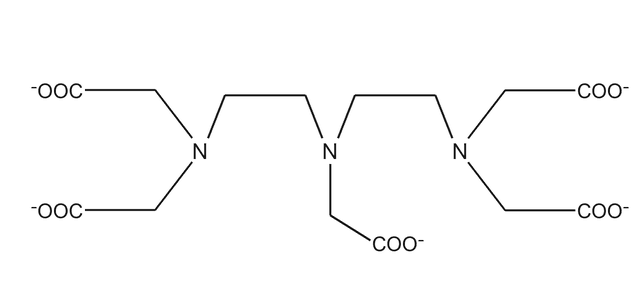
- 701 mark
Question 70
The total number of isomers for a square planar complex is:
- 711 mark
Question 71
The complex ion that will lose its crystal field stabilization energy upon oxidation of its metal to +3 state is:
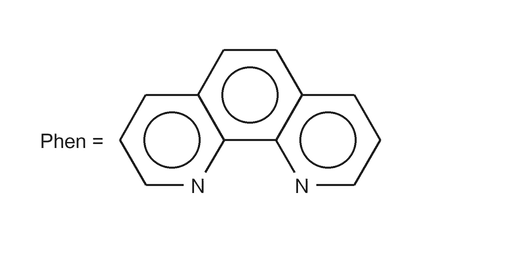
(and ignore pairing energy)
- 721 mark
Question 72
Complete removal of both the axial ligands (along the z-axis) from an octahedral complex leads to which of the following splitting patterns? (relative orbital energies not on scale)
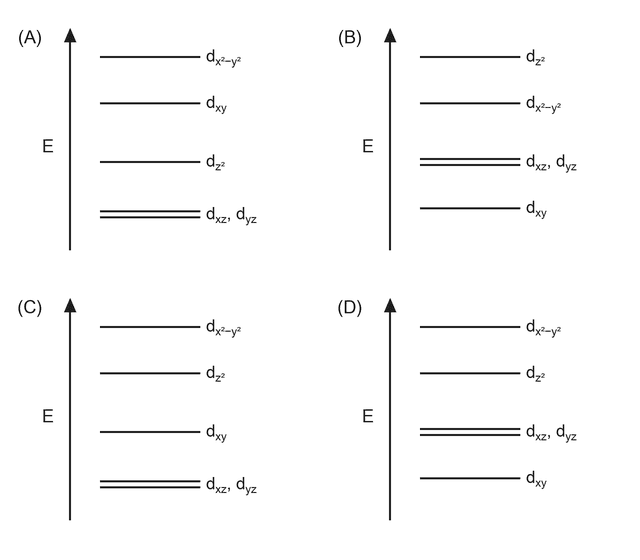
- 731 mark
Question 73
The difference in the number of unpaired electrons of a metal ion in its high-spin and low-spin octahedral complexes is two. The metal ion is:
- 741 mark
Question 74
The compound used in the treatment of lead poisoning is:
- 751 mark
Question 75
The complex that can show optical activity is:
- 761 mark
Question 76
Complex X of composition has a spin only magnetic moment of 3.83 BM. It reacts with and shows geometrical isomerism. The IUPAC nomenclature of X is:
- 771 mark
Question 77
The complex that can show fac- and mer-isomers is:
- 781 mark
Question 78
The number of possible optical isomers for the complexes with and hybridized metal atom, respectively, is:
Note: A and B are unidentate neutral and unidentate monoanionic ligands, respectively.
- 791 mark
Question 79
Among the statements (1)–(4), the incorrect ones are:
(1) Octahedral Co(III) complexes with strong field ligands have very high magnetic moments.
(2) When , the d-electron configuration of Co(III) in an octahedral complex is .
(3) Wavelength of light absorbed by is lower than that of .
(4) If the for an octahedral complex of Co(III) is 18,000 cm⁻¹, the for its tetrahedral complex with the same ligand will be 16,000 cm⁻¹.
- 801 mark
Question 80
The values of the crystal field stabilization energies for a high spin metal ion in octahedral and tetrahedral fields, respectively, are:
- 811 mark
Question 81
Consider that a metal ion () forms a complex with aqua ligands, and the spin only magnetic moment of the complex is 4.90 BM. The geometry and the crystal field stabilization energy of the complex is:
- 821 mark
Question 82
Complexes of metal Ni and Fe have ideal square pyramidal and trigonal bipyramidal geometries, respectively. The sum of the 90°, 120° and 180° L-M-L angles in the two complexes is ____.
- 831 mark
Question 83
The theory that can completely/properly explain the nature of bonding in is:
- 841 mark
Question 84
The denticity of an organic ligand, biuret is:
- 851 mark
Question 85
1 mol of an octahedral metal complex with formula on reaction with excess of gives 1 mol of AgCl. The denticity of ligand L is ____. (Integer answer)
- 861 mark
Question 86
The number of optical isomers possible for is ____.
- 871 mark
Question 87
The number of geometrical isomers found in the metal complexes , , and respectively, are:
- 881 mark
Question 88
The number of geometrical isomers possible in triamminetrinitrocobalt(III) is X and in trioxalatochromate(III) is Y. Then the value of X + Y is ____.
- 891 mark
Question 89
Three moles of AgCl get precipitated when one mole of an octahedral co-ordination compound with empirical formula reacts with excess of silver nitrate. The number of chloride ions satisfying the secondary valency of the metal ion is ____.
- 901 mark
Question 90
The number of stereoisomers possible for is ____.
[ox = oxalate]
- 911 mark
Question 91
The Crystal Field Stabilization Energy (CFSE) and magnetic moment (spin-only) of an octahedral aqua complex of a metal ion () are −0.8 and 3.87 BM, respectively. Identify ():
- 921 mark
Question 92
Spin only magnetic moment in BM of is:
- 931 mark
Question 93
According to the valence bond theory, the hybridization of central metal atom is for which one of the following compounds?
- 941 mark
Question 94
The correct order of intensity of colours of the compounds is:
- 951 mark
Question 95
The calculated magnetic moments (spin only value) for species , and respectively are
- 961 mark
Question 96
Total number of relatively more stable isomer(s) possible for octahedral complex will be ____.
- 971 mark
Question 97
Given below are two statements.
Statement I: In , Cu-O bonds are present.
Statement II: In , ligands coordinating with Cu(II) ion are O- and S-based ligands.
In the light of the above statements, choose the correct answer from the options given below:
- 981 mark
Question 98
(A)
(B)
(C) and
(D)
Number of complex(es) which will exist in cis trans is/are ____.
- 991 mark
Question 99
The number of hydrogen bonded water molecule(s) associated with stoichiometry is ____.
- 1001 mark
Question 100
Consider the complex ions, trans- (P) and cis- (Q). The correct statement regarding them is:
- 1011 mark
Question 101
The spin only magnetic moment of the complex present in Fehling's reagent is ____ B.M. (Nearest integer).
- 1021 mark
Question 102
Consider the following metal complexes:
, , ,
The spin-only magnetic moment value of the complex that absorbs light with shortest wavelength is ____ B.M. (Nearest integer)
- 1031 mark
Question 103
The correct order of energy of absorption for the following metal complex is
P: , Q: , R:
- 1041 mark
Question 104
Spin only magnetic moment () of is ____ B.M. (Nearest integer).
- 1051 mark
Question 105
, , , ,
Among the given complexes, number of paramagnetic complexes is ____.
- 1061 mark
Question 106
Arrange the following coordination compounds in the increasing order magnetic moments. (Atomic numbers: Mn = 25; Fe = 26)
(P)
(Q)
(R) (high spin)
(S)
- 1071 mark
Question 107
In the cobalt-carbonyl complex: , number of Co-Co bonds is "X" and terminal CO ligands is "Y". X + Y = ____.
- 1081 mark
Question 108
The existence of two different coloured complexes with the composition of is due to:
- 1091 mark
Question 109
Which of the following complex ion is not expected to absorb visible light?
- 1101 mark
Question 110
The complexes and are the examples of which type of isomerism?
- 1111 mark
Question 111
Of the following complex ions, which is diamagnetic in nature?
- 1121 mark
Question 112
Which of the following carbonyls will have the strongest C – O bond?
- 1131 mark
Question 113
Which one of the following is an outer orbital complex and exhibits paramagnetic behaviour?
- 1141 mark
Question 114
An excess of is added to 100 mL of a 0.01 M solution of dichlorotetraaquachromium(III) chloride. The number of moles of AgCl precipitated would be:
- 1151 mark
Question 115
A magnetic moment of 1.73 BM will be shown by which one among the following:
- 1161 mark
Question 116
Among the following complexes the one which shows zero crystal field stabilization energy (CFSE):
- 1171 mark
Question 117
Cobalt (III) chloride forms several octahedral complexes with ammonia. Which of the following will not give test of chloride ions with silver nitrate at 25°C?
- 1181 mark
Question 118
Number of possible isomers for the complex will be (en = ethylenediamine)
- 1191 mark
Question 119
Which of these statements about is true?
- 1201 mark
Question 120
Which of the following pairs of d-orbitals will have electron density along the axis?
- 1211 mark
Question 121
Which of the following has longest C—O bond length? (Free C—O bond length in CO is 1.128 Å)
- 1221 mark
Question 122
An example of a sigma bonded organometallic compound is:
- 1231 mark
Question 123
The correct order of the stoichiometries of AgCl formed when in excess is treated with the complexes: , , respectively is:–
- 1241 mark
Question 124
and both when dissolved in water containing ions, the pair of species formed is:
- 1251 mark
Question 125
The type of isomerism shown by the complex is
- 1261 mark
Question 126
The geometry and magnetic behaviour of the complex are
- 1271 mark
Question 127
Iron carbonyl, is
- 1281 mark
Question 128
The Crystal Field Stabilisation Energy (CFSE) for is 18000 cm. The CFSE for will be
- 1291 mark
Question 129
Which of the following is the correct order of increasing field strength of ligands to form coordination compounds?
- 1301 mark
Question 130
The calculated spin only magnetic moment of ion is
- 1311 mark
Question 131
Ethylene diaminetetraacetate (EDTA) ion is:
- 1321 mark
Question 132
Match List-I with List-II.
List-I List-II A. (i) 5.92 BM B. (ii) 0 BM C. (iii) 4.90 BM D. (iv) 1.73 BM Choose the correct answer from the options given below.
- 1331 mark
Question 133
The IUPAC name of the complex- is:
- 1341 mark
Question 134
The order of energy absorbed which is responsible for the colour of complexes.
(A)
(B) and
(C)