
Opening your dashboard
Class 12 Biology Chapter 15 Biotechnology: Principles and Processes: Practice Questions
117 questions on Chapter 15, each worked through on its own page with the AI tutor. Class 12 Biology, ICSE 2026-27.
117 questions
1–4 marks · Mixed difficulty
- 11 mark
Question 1
Humans made curd, wine, vinegar and bread for thousands of years without knowing that microorganisms were involved. In the middle of the nineteenth century, what did Louis Pasteur show?
- 22 marks
Question 2
A company grows a bacterium in a large culture to make an enzyme. One batch is spoilt because other microbes have grown in it along with the bacterium.
Which of the two core techniques of biotechnology has failed here? State what this technique is meant to ensure.
- 31 mark
Question 3
Plant and animal breeders have long used hybridisation to bring a useful trait into a crop or breed. What is the main advantage of genetic engineering over traditional hybridisation?
- 43 marks
Question 4
A piece of DNA carrying a useful gene is somehow transferred into a bacterial cell. After many cell divisions, the gene is not found in the progeny cells.
(a) Explain what happened to the transferred DNA.
(b) What must happen to this DNA so that it multiplies and is inherited? Name the specific DNA sequence involved and state its role.
- 52 marks
Question 5
Distinguish between old biotechnology and modern biotechnology on the basis of what is exploited in each. Give one example of each.
- 61 mark
Question 6
In the early 1970s, Stanley Cohen and Herbert Boyer joined a piece of DNA into a plasmid of Salmonella and transferred the plasmid into E. coli. In this experiment, which DNA was the transgene?
- 71 mark
Question 7
Restriction endonuclease, DNA ligase and DNA polymerase are the DNA-modifying enzymes used as tools in rDNA technology. Which statement about their source is correct?
- 81 mark
Question 8
Retroviruses have been modified and are now used to deliver desirable genes into animal cells. Which natural ability of retroviruses makes them suitable for this?
- 91 mark
Question 9
Five kinds of cloning vectors are used in experiments with E. coli, animals or humans. Which two kinds are the most commonly used?
- 102 marks
Question 10
In the first rDNA experiment, E. coli carrying the recombinant plasmid reproduced and formed a clone of cells, all of which contained the antibiotic resistance gene.
Which enzyme tool made this possible, and how? What is the process called?
- 112 marks
Question 11
A recombinant plasmid carrying a desired gene has been prepared in a test tube. Give two reasons why it must next be introduced into a host cell such as E. coli.
- 123 marks
Question 12
A bacterium makes a restriction endonuclease that cuts the sequence 5′-GAATTC-3′. Its own chromosome contains this sequence many times, yet the bacterium's DNA is not cut; the DNA of a bacteriophage that enters the cell is cut at the same sequence.
Explain how the bacterium protects its own DNA, and how this helps the bacterium.
- 131 mark
Question 13
A restriction endonuclease is the third such enzyme isolated from strain d of the bacterium Haemophilus influenzae. Following the naming convention of restriction endonucleases, what is it called?
- 143 marks
Question 14
The top strand (5′ → 3′) of a short, linear, double-stranded DNA is:
5′-TTAGAATTCCGTACGAATTGACCTGAATTCGA-3′
It is treated with EcoRI, which cuts between G and A of its recognition sequence.
(a) How many EcoRI recognition sites does this DNA have? Explain why the stretch GAATTG is not one.
(b) How many DNA fragments are produced?
(c) Write the single-stranded sticky end left at each cut.
- 151 mark
Question 15
Which of the following is not true of the sequences recognised by restriction endonucleases?
- 162 marks
Question 16
A restriction endonuclease X (hypothetical example) recognises 5′-GGATCC-3′ and cuts each strand between the two G's, reading 5′ → 3′. It acts on this stretch of DNA:
5′-AGGATCCT-3′
3′-TCCTAGGA-5′
(a) Write the two double-stranded pieces formed after the cut.
(b) Name the single-stranded overhang and show why the two pieces can rejoin.
- 171 mark
Question 17
When a restriction endonuclease such as EcoRI cuts its palindromic recognition sequence, each cut end is left with a short single-stranded portion. Why does this happen?
- 183 marks
Question 18
A piece of DNA from a mammal and a piece of DNA from a bird are to be joined into one molecule.
(a) What condition must be met when the two DNAs are cut?
(b) Why do the cut ends then come together?
(c) Which enzyme completes the joining, and what is the new molecule called?
- 191 mark
Question 19
A mixture of three DNA fragments of 500 bp, 2,000 bp and 5,000 bp is run on an agarose gel. (Hypothetical data.) After the run, which fragment is farthest from the wells?
- 202 marks
Question 20
While setting up gel electrophoresis, a student wrongly connects the end of the gel that has the wells to the positive electrode (anode). Predict what will happen to the DNA when the current is switched on, and give a reason.
- 213 marks
Question 21
After electrophoresis, a student looks at the agarose gel in ordinary light and cannot see any DNA bands.
(a) What must be done to make the bands visible, and how do they appear?
(b) How is one particular band then obtained for constructing rDNA?
- 221 mark
Question 22
Agarose is the most commonly used matrix in gel electrophoresis. From what is it obtained?
- 233 marks
Question 23
A circular plasmid (hypothetical example) was run on an agarose gel: lane 1 — uncut plasmid; lane 2 — plasmid cut completely with enzyme K; lane 3 — plasmid cut completely with enzyme L. Each band is one fragment (no two fragments have the same size).

(a) How many recognition sites does the plasmid have for K, and for L?
(b) Why does lane 1 show only one band?
(c) If a linear DNA cut with an enzyme gave the same pattern as lane 3, how many recognition sites would that DNA have?
- 244 marks
Question 24
Draw a neat, labelled diagram of an agarose gel after electrophoresis of undigested DNA (one lane) and digested DNA (three lanes). Mark the wells, the electrodes, the direction of movement of DNA, and the largest and smallest fragments.
- 251 mark
Question 25
Two vectors are identical except for their origin of replication (ori): the ori of vector P supports a high copy number, while that of vector Q supports a low copy number. The same gene is cloned in each. What is expected with vector P?
- 262 marks
Question 26
A student wants to insert a gene into a plasmid using the enzyme EcoRI, but finds that this plasmid has three EcoRI recognition sites.
Explain why this plasmid is a poor vector for cloning with EcoRI, and suggest what the student should do.
- 274 marks
Question 27
(Hypothetical data.) A plasmid vector carries two genes: one for ampicillin resistance and one for kanamycin resistance. Its only cloning site lies inside the kanamycin-resistance gene. After ligation with foreign DNA, the plasmids were added to plasmid-free E. coli. Five colonies grown on plain agar were then tested on two plates.
Colony Grows on ampicillin Grows on kanamycin 1 Yes Yes 2 Yes No 3 No No 4 Yes No 5 Yes Yes (i) Which colonies contain the recombinant plasmid?
(ii) Which colonies contain a plasmid without the foreign DNA?
(iii) Which colony was not transformed at all?
(iv) Explain why the recombinant colonies fail to grow on kanamycin.
- 281 mark
Question 28
(Hypothetical data.) Foreign DNA is inserted into the gene coding for β-galactosidase in a vector. The transformed bacteria are grown on a medium containing a chromogenic substrate. The plate shows 46 blue colonies and 14 colonies with no blue colour. Which colonies should be picked as recombinants, and why?
- 292 marks
Question 29
Normal E. coli cells do not carry resistance against antibiotics such as tetracycline.
Explain why this fact is essential if a tetracycline-resistance gene on a vector is to work as a selectable marker.
- 301 mark
Question 30
Most commonly used vectors carry unique recognition sites for several restriction enzymes close together in a small region of DNA called a polylinker. What is the main advantage of this region?
- 313 marks
Question 31
(Hypothetical data.) The origin of replication of vector X keeps about 20 copies of the plasmid in each cell; that of vector Y keeps about 500 copies per cell. The same gene is cloned into each vector, and each culture is grown to 2,000,000 cells.
(i) Which part of a vector decides the number of copies made in a cell?
(ii) Calculate the number of copies of the gene in each culture.
(iii) Which vector would you choose to get the most copies of the gene, and how many times more copies does it give?
- 322 marks
Question 32
(Hypothetical data.) Two plasmid vectors are equally suitable in every other way, but one is about 4,000 base pairs long and the other about 40,000 base pairs long.
Which one should be chosen as the cloning vector? Give two reasons.
- 331 mark
Question 33
Which of the following pairs are both indirect methods of gene transfer, that is, methods that use a vector?
- 342 marks
Question 34
A student mixed recombinant plasmids with untreated E. coli cells at room temperature and later found almost no transformed cells.
Suggest two changes to the procedure, and explain how each helps the bacteria take up the DNA.
- 353 marks
Question 35
Three laboratories transfer a gene of interest into host cells in different ways.
Lab P: a very fine glass micropipette is used, under a microscope, to put rDNA straight into the nucleus of an animal cell.
Lab Q: microscopic metal particles coated with the rDNA are fired at high velocity into plant tissue.
Lab R: the gene is placed in a modified tumour-inducing plasmid of a plant pathogenic bacterium, which then infects tomato plants.
For each laboratory, name the method used and state whether it is a direct or an indirect method of gene transfer.
- 361 mark
Question 36
A laboratory has to isolate DNA from three samples: E. coli cells, spinach leaf cells and cells of a mushroom (a fungus). Which set of enzymes, in the same order as the samples, is used to break open the cells?
- 372 marks
Question 37
After the cells have been broken open, a DNA extract still contains RNA, and the DNA is intertwined with proteins such as histones.
Name the enzyme used to remove each of these, and explain why the DNA must be pure before the next step of rDNA technology.
- 382 marks
Question 38
In the last stage of isolating DNA, chilled ethanol is added to the purified DNA solution.
What will the student observe, and how is the DNA then collected?
- 391 mark
Question 39
Four stages of recombinant DNA technology are listed below.
P – Insertion of rDNA into the host cell
Q – Amplification of the desired DNA fragment by PCR
R – Cutting of DNA by restriction endonucleases
S – Formation of recombinant DNA
Which is the correct order in which they take place?
- 401 mark
Question 40
A polymerase chain reaction (PCR) starts with a single copy of a DNA fragment, and the number of copies doubles in every cycle. How many copies are present after 6 cycles?
- 413 marks
Question 41
In a PCR machine, one cycle of denaturation, annealing and extension takes about 2 minutes, and the number of DNA copies doubles in every cycle.
(i) Starting from one copy, how many cycles are needed before the number of copies first goes above one million? Show your working.
(ii) About how long does this take?
(iii) If the reaction starts with 50 copies, how many copies will there be after 30 minutes?
- 421 mark
Question 42
In a PCR, a student uses a DNA polymerase that is destroyed by heat in place of the thermostable enzyme from Thermus aquaticus. What would happen?
- 433 marks
Question 43
(Hypothetical data.) A circular plasmid of 5,000 base pairs has two recognition sites for a restriction enzyme. It is incubated with the enzyme, and small samples are taken out at different times and run on an agarose gel to check the progress of the cutting.
Time of sample Bands seen on the gel 0 min uncut plasmid only 10 min uncut plasmid, 5,000 bp linear DNA, 3,200 bp, one other fragment 30 min 3,200 bp, one other fragment 60 min 3,200 bp, one other fragment (i) At which sampling time is the cutting first seen to be complete? Give a reason.
(ii) Why does the 10-minute sample still show the uncut plasmid?
(iii) What is the size of the other fragment, and which of the two fragments lies nearer the wells?
- 443 marks
Question 44
Draw a neat labelled diagram of a simple stirred-tank bioreactor, labelling any six parts.
- 451 mark
Question 45
In a bioreactor run as a continuous culture system, the used medium is drained out from one side while fresh medium is added from the other. Why is this done?
- 461 mark
Question 46
Which one of the following is not a part of downstream processing?
- 474 marks
Question 47
(Hypothetical situation.) During a run of a stirred-tank bioreactor, an engineer notes four problems.
(i) The culture broth becomes more acidic as the cells grow.
(ii) Cells collect at the bottom, and parts of the broth get too little oxygen.
(iii) The broth warms up above the best temperature for the cells.
(iv) The team needs to check the growth of the culture every few hours without stopping the run.
For each problem, name the system or part of the bioreactor that deals with it, and say briefly how.
- 482 marks
Question 48
A culture of fast-growing cells keeps running short of oxygen in a simple stirred-tank bioreactor, even though the stirrer is working.
Name a type of bioreactor that would solve this problem, and explain how it does so.
- 492 marks
Question 49
In PCR, two primers are added to the DNA fragment before it is heated.
(i) What are primers?
(ii) Where do they attach during annealing, and why are two of them needed?
- 501 mark
Question 50
Which one of the following is not required for rDNA technology?
- 511 mark
Question 51
Which one of the following is not a cloning vector in genetic engineering?
- 521 mark
Question 52
Gene transfer through vectors can be done by
- 531 mark
Question 53
An animal containing a foreign gene is called a
- 541 mark
Question 54
The role of restriction endonucleases is
- 551 mark
Question 55
The function of DNA ligase is
- 561 mark
Question 56
Identify the plasmid
- 571 mark
Question 57
Restriction endonucleases used in recombinant rDNA technology are obtained from
- 581 mark
Question 58
Plasmids are
- 591 mark
Question 59
One of the key factors, which makes the plasmid the vector in genetic engineering is that
- 601 mark
Question 60
Which of the following is used as a best genetic vector in plants?
- 611 mark
Question 61
The tumour-inducing capacity of Agrobacterium tumefaciens is located in large extrachromosomal plasmids called
- 621 mark
Question 62
The construction of the first recombinant DNA was done by using the native plasmid of
- 631 mark
Question 63
The linking of antibiotic resistance gene with the plasmid vector became possible with
- 641 mark
Question 64
Gel electrophoresis is used for
- 651 mark
Question 65
A segment of DNA or a desired gene can be cut and isolated with the help of ________ enzyme.
- 661 mark
Question 66
The process of making multiple identical copies of any piece of DNA is called ________ of DNA.
- 671 mark
Question 67
The endonuclease used by scientists Cohen and Boyer was ________.
- 681 mark
Question 68
Plasmid-free E. coli are treated with chemical ________ to make their membranes more permeable to insert the recombinant plasmid.
- 691 mark
Question 69
The sequences recognised by endonucleases are typically 4–6 nucleotides long and are ________ nucleotide sequences.
- 701 mark
Question 70
In the plasmid named pSC101, S and C refer to ________.
- 711 mark
Question 71
DNA fragments can be separated by a technique called ________.
- 721 mark
Question 72
________ and ________ are natural vectors for cloning of genes in plants and animals.
- 731 mark
Question 73
Agrobacterium contains tumour-inducing plasmids called ________.
- 741 mark
Question 74
Electroporation produces ________ in the plasma membrane of the host cells.
- 751 mark
Question 75
rDNA involves combining of DNA from two different organisms to generate a recombinant DNA.
- 761 mark
Question 76
Cutting of a DNA fragment is done with the help of enzyme DNA ligase.
- 771 mark
Question 77
Cohen and Boyer used a restriction endonuclease which was obtained from bacteria Agrobacterium.
- 781 mark
Question 78
Plasmid DNA acts as vector as it can transfer the piece of desired DNA to the host cell.
- 791 mark
Question 79
EcoRI is the name of a plasmid obtained from bacteria E. coli.
- 801 mark
Question 80
The sequences recognised by restriction endonucleases are palindrome nucleotide sequences.
- 811 mark
Question 81
Chitinases are used to break open the fungal cells.
- 821 mark
Question 82
DNA fragments being positively charged move towards the negative electrode during electrophoresis.
- 831 mark
Question 83
Annealing means amplification of genes.
- 841 mark
Question 84
A bioreactor has an agitator and an oxygen delivery system along with pH control.
- 851 mark
Question 85
A technique in which microparticles of gold or tungsten coated with foreign DNA are bombarded into target host cells.
- 861 mark
Question 86
Scientific name of the organism whose plasmid was used by Cohen and Boyer.
- 871 mark
Question 87
A plant pathogenic bacteria that is known as natural genetic 'engineer' as it can transfer part of its plasmid into the host plant.
- 881 mark
Question 88
A technique to make multiple copies of desired gene by using DNA polymerase.
- 891 mark
Question 89
A large vessel in which the large amount of culture can be processed and gene products can be produced on a large scale.
- 901 mark
Question 90
Assertion (A): Restriction enzymes cut the strand of DNA to produce sticky ends.
Reason (R): Stickiness of the ends facilitates the action of the enzyme DNA polymerase.
- 911 mark
Question 91
Assertion (A): Plasmids are extra-chromosomal DNA.
Reason (R): Plasmids are found in bacteria and are useful in genetic engineering.
- 921 mark
Question 92
Assertion (A): Plasmids are single-stranded extra chromosomal DNA.
Reason (R): Plasmids are usually present in eukaryotic cells.
- 931 mark
Question 93
Assertion (A): Restriction endonucleases function by 'inspecting' the length of a DNA sequence to find the specific recognition sequence.
Reason (R): The sequences recognised by endonucleases are typically 4–6 nucleotides long and are palindromes, also called palindromic nucleotide sequences.
- 941 mark
Question 94
Assertion (A): E. coli having pBR322 with DNA insert at BamHI site cannot grow in medium containing tetracycline.
Reason (R): Recognition site for BamHI is present in tetR region of pBR322.
- 951 mark
Question 95
Assertion (A): For amplification of gene, DNA polymerase is used to copy the identified gene by polymerase chain reaction.
Reason (R): Amplification of a gene can be done by inserting it into a bacterium and allowing a bacterium to undergo repeated cell divisions.
- 961 mark
Question 96
Assertion (A): Ori is a sequence from where replication starts.
Reason (R): A prokaryotic DNA has a single origin of replication.
- 971 mark
Question 97
Assertion (A): Electroporation makes a bacterial cell a competent host to take up DNA.
Reason (R): This technique induces temporary pores in the plasma membrane of the host cell to facilitate entry of foreign DNA.
- 981 mark
Question 98
Assertion (A): Agrobacterium tumefaciens is commonly used in genetic engineering because this bacterium is associated with roots of all cereals and pulse crops.
Reason (R): A gene incorporated in the bacterial chromosomal genome gets automatically transferred to the crop with which the bacterium is associated.
- 991 mark
Question 99
Assertion (A): In a bioreactor, the desired gene products are biologically converted into specific products like proteins and enzymes.
Reason (R): A bioreactor provides the optimal growth conditions like temperature, pH, salts, vitamins and oxygen.
- 1003 marks
Question 100
Can you list 10 recombinant proteins which are used in medical practice? Find where they are used as therapeutics (use the internet).
- 1012 marks
Question 101
From what you have learnt, can you tell whether enzymes are bigger or DNA is bigger in molecular size? How did you know?
- 1022 marks
Question 102
Do eukaryotic cells have restriction endonucleases? Justify your answer.
- 1032 marks
Question 103
Besides better aeration and mixing properties, what other advantages do stirred-tank bioreactors have over shake flasks?
- 1042 marks
Question 104
Collect 5 examples of palindromic DNA sequences by consulting your teacher. Better try to create a palindromic sequence by following base pair rules.
- 1051 mark
Question 105
Can you recall meiosis and indicate at what stage a recombinant DNA is made?
- 1062 marks
Question 106
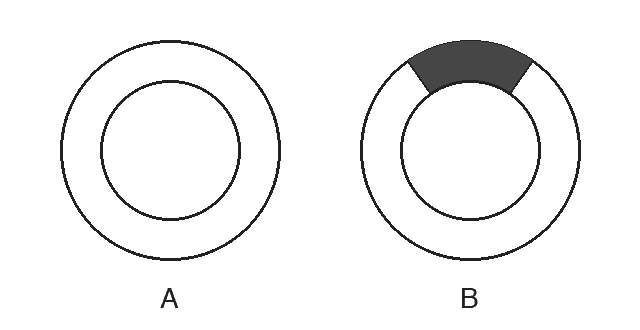
What is the difference between these two plasmids?
- 1072 marks
Question 107
Eukaryotic organisms do not have restriction endonuclease. What is its role in prokaryotes?
- 1082 marks
Question 108
What is the basis upon which the discipline of biotechnology was founded by Boyer and Cohen?
- 1092 marks
Question 109
One of the easily manipulated plasmids used as a vector is pBR322. What do the letters p, B, R and 322 signify?
- 1102 marks
Question 110
Give one word for the following:
(1) RNAi
(2) Preventing mRNA translation
(3) Mobile genetic element
(4) Sequence of base pairs that is same on the 2 strands
- 1112 marks
Question 111
Name the palindromic DNA sequences and restriction enzymes.
(i) 5′ ______ 3′ / 3′ ______ 5′ EcoRI restriction enzyme.
(ii) 5′ GGATCC 3′ / 3′ CCTAGG 5′ ______
(iii) ______ is acted upon by SmaI ______
(iv) 5′ AGTACT 3′ / 3′ TCATGA 5′ ______
- 1122 marks
Question 112
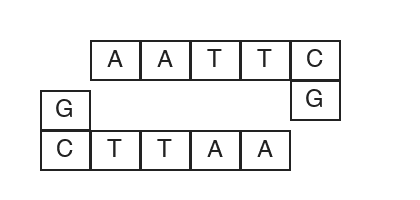
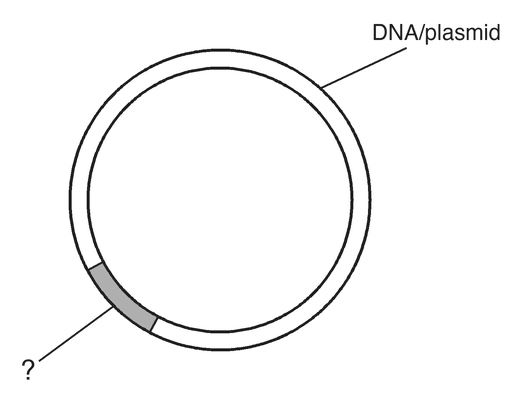
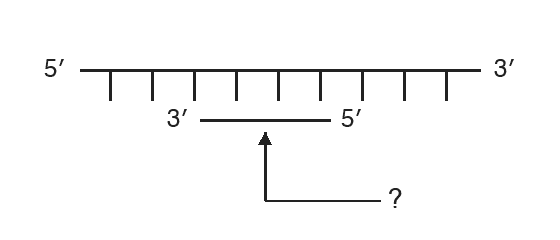
Name the following:
(i) 5′-GAATTC-3′ / 3′-CTTAAG-5′ ______
(ii)
(iii)
(iv)
- 1132 marks
Question 113
Name the enzyme involved in the following process:
(i) Inspecting the DNA length for palindromic nucleotide sequence.
(ii) Joining of DNA fragments.
(iii) Breaking of cell to release DNA and other macromolecules.
(iv) Repeated DNA fragments.
- 1143 marks
Question 114
__a__ DNA __b__ DNA
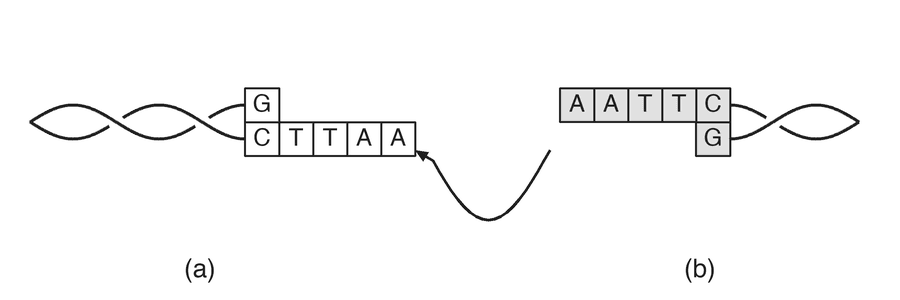
Study the linking DNA fragments shown above.
(i) Name 'a' DNA and 'b' DNA.
(ii) Name the restriction enzyme that recognizes this palindrome.
(iii) Name the enzyme that can link these two DNA fragments.
- 1153 marks
Question 115
Write the matching word.
A B (i) HindII Gel electrophoresis (ii) Separation of DNA fragments At tetracycline resistance gene in vector pBR322 (iii) BamHI First restriction endonuclease - 1161 mark
Question 116
Give a reason for the following:
DNA cannot enter directly into the host cell.
- 1172 marks
Question 117
Write a short note on Electrophoresis.