
Opening your dashboard
Class 5 Maths Chapter 17: Perimeter and Area Solutions
31 textbook questions with step-by-step answers, free to read, for ICSE 2026-27.
Get talked through Ch 17, not just shown the answer
Reading a finished solution is not the same as being able to do it. The AI tutor takes one question at a time and works it with you, in your own words, until you can.
- Ask it out loud, in your own words
- It gives you the next step, not the answer
- Stuck on part (ii)? Start there
31 questions with solutions
3 marks · Mixed difficulty
- 13 marks
Question 1
Find the perimeter of the rectangle whose measures are:
Length Breadth Perimeter (a) 10 m 6 m (b) cm cm (c) 15.8 cm 8.6 cm (d) 1 m 20 cm 60 cm (e) 12.5 m 5.5 cm (f) 2 m 12 cm 30 m (g) 23.3 cm 7 cm (h) 5 m 20 cm 42 cm Solve with AIWritten solution
Solution:
Concept: The perimeter of a figure is the distance all the way round it. For a rectangle, we go along the length and the breadth twice, so Perimeter = 2 × (length + breadth). For a square, all four sides are equal, so Perimeter = 4 × side. Both lengths must be in the same unit.
Step 1 — Part (a).
Both sides are in metres, so we add them and double the sum.
Step 2 — Part (b).
First we add the two mixed numbers. We write as so the fractions have the same bottom number.
Now we double it.
Step 3 — Part (c).
Both sides are in cm.
Step 4 — Part (d).
We write 1 m 20 cm as 120 cm, so both sides are in cm.
360 cm is 3 m 60 cm.
Step 5 — Part (e).
The length is in metres and the breadth is in cm. We write 12.5 m as 1250 cm.
2511 cm is 25 m 11 cm.
Step 6 — Part (f).
We write 2 m 12 cm as 2.12 m, so both sides are in metres.
64.24 m is 64 m 24 cm.
Step 7 — Part (g).
Both sides are in cm.
Step 8 — Part (h).
We write 5 m 20 cm as 520 cm.
1124 cm is 11 m 24 cm.
Watch out: Change both sides to one unit before adding. In (e), do not add 12.5 and 5.5; write 12.5 m as 1250 cm first.
Note: In (e) the breadth is printed as 5.5 cm, which is very narrow for a length of 12.5 m. If the breadth was meant to be 5.5 m, the perimeter is 2 × (12.5 + 5.5) = 36 m.
Therefore, (a) 32 m; (b) cm; (c) 48.8 cm; (d) 3 m 60 cm; (e) 25 m 11 cm; (f) 64 m 24 cm; (g) 60.6 cm; (h) 11 m 24 cm.
- 23 marks
Question 2
Find the perimeter of a square whose side is:
(a) 7.6 cm
(b) m
(c) 13 m 75 cm
(d) 23.05 cm
Solve with AIWritten solution
Solution:
Concept: The perimeter of a figure is the distance all the way round it. For a rectangle, we go along the length and the breadth twice, so Perimeter = 2 × (length + breadth). For a square, all four sides are equal, so Perimeter = 4 × side. Both lengths must be in the same unit.
Step 1 — Part (a).
A square has four equal sides, so we multiply the side by 4.
Step 2 — Part (b).
We change the mixed number into an improper fraction and multiply by 4.
Step 3 — Part (c).
We write 13 m 75 cm as 13.75 m.
Step 4 — Part (d).
We multiply the side by 4.
Watch out: Use 4 × side for a square, not 2 × side.
Note: In (b), m is about 74.67 m. The value 74.66 m is the same number cut short after two decimal places.
Therefore, (a) 30.4 cm; (b) m; (c) 55 m; (d) 92.2 cm.
- 33 marks
Question 3
Find the perimeter of a triangle whose sides are 6.3 cm, 5 cm and 4.7cm.
Solve with AIWritten solution
Solution:
Concept: The perimeter of a figure is the total length of its boundary, that is, the sum of all its sides.
Given: Sides 6.3 cm, 5 cm and 4.7 cm.
Step 1 — Add the three sides.
The perimeter of any figure is the sum of all its sides.
Watch out: Line up the decimal points when adding: 6.3 + 4.7 is 11, and 11 + 5 is 16.
Therefore, the perimeter of the triangle is 16 cm.
- 43 marks
Question 4
The length of a rectangular field is three times its breadth. If the breadth of the rectangle is m, find the perimeter of the rectangle.
Solve with AIWritten solution
Solution:
Concept: The perimeter of a figure is the distance all the way round it. For a rectangle, we go along the length and the breadth twice, so Perimeter = 2 × (length + breadth). For a square, all four sides are equal, so Perimeter = 4 × side. Both lengths must be in the same unit.
Given: Breadth m; length = 3 × breadth.
Step 1 — Find the length.
The length is three times the breadth.
Step 2 — Find the perimeter.
Now we use Perimeter = 2 × (length + breadth).
Watch out: Find the length first. The perimeter needs both the length and the breadth.
Therefore, the perimeter of the field is 28 m.
- 53 marks
Question 5
The breadth of a rectangular garden is 6 m less than its length. If the length of the garden is 30m, find the perimeter of the garden.
Solve with AIWritten solution
Solution:
Concept: The perimeter of a figure is the distance all the way round it. For a rectangle, we go along the length and the breadth twice, so Perimeter = 2 × (length + breadth). For a square, all four sides are equal, so Perimeter = 4 × side. Both lengths must be in the same unit.
Given: Length 30 m; breadth 6 m less than the length.
Step 1 — Find the breadth.
The breadth is 6 m less than the length.
Step 2 — Find the perimeter.
We use Perimeter = 2 × (length + breadth).
Watch out: The words "6 m less" mean subtract 6, not divide by 6.
Therefore, the perimeter of the garden is 108 m.
- 63 marks
Question 6
The length of a square field is 35 m. What distance will a man walk in going around it 3 times ?
Solve with AIWritten solution
Solution:
Concept: The perimeter of a figure is the distance all the way round it. For a rectangle, we go along the length and the breadth twice, so Perimeter = 2 × (length + breadth). For a square, all four sides are equal, so Perimeter = 4 × side. Both lengths must be in the same unit.
Given: A square field of side 35 m; 3 rounds.
Step 1 — Find one round.
One round of the square field is its perimeter.
Step 2 — Find three rounds.
The man goes round 3 times.
Watch out: One round is the whole perimeter (140 m), not one side.
Therefore, the man walks 420 m.
- 73 marks
Question 7
Sonu bought a table cloth 2.25 m long and 1.75 m wide. She wanted to put lace around it. How many metres of lace would she have to buy? Also find how much would the lace cost if it costs ₹ 14.50 per metre ?
Solve with AIWritten solution
Solution:
Concept: The perimeter of a figure is the distance all the way round it. For a rectangle, we go along the length and the breadth twice, so Perimeter = 2 × (length + breadth). For a square, all four sides are equal, so Perimeter = 4 × side. Both lengths must be in the same unit.
Given: A cloth 2.25 m by 1.75 m; lace costs ₹ 14.50 a metre.
Step 1 — Find the lace needed.
The lace goes all round the cloth, so its length is the perimeter.
Step 2 — Find the cost.
Each metre costs ₹ 14.50, so we multiply 8 by 14.50.
So the lace costs ₹ 116.
Watch out: Lace goes round the edge, so use the perimeter, not the area.
Therefore, Sonu needs 8 m of lace, which costs ₹ 116.
- 83 marks
Question 8
Akash covers a distance of 48 m while going round a square field twice. Find the side of the square. How much wire will be needed for fencing around it once? Find the cost of the wire if 1 metre costs ₹ 1.75.
Solve with AIWritten solution
Solution:
Concept: The perimeter of a figure is the distance all the way round it. For a rectangle, we go along the length and the breadth twice, so Perimeter = 2 × (length + breadth). For a square, all four sides are equal, so Perimeter = 4 × side. Both lengths must be in the same unit.
Given: 48 m for two rounds; wire costs ₹ 1.75 a metre.
Step 1 — Find one round.
Akash goes round twice and covers 48 m. So one round is half of 48 m.
Step 2 — Find the side.
One round is the perimeter of the square, made of its 4 equal sides.
Step 3 — Find the wire.
Fencing round once needs wire as long as the perimeter. So 24 m of wire is needed.
Step 4 — Find the cost.
Each metre of wire costs ₹ 1.75.
So the wire costs ₹ 42.
Watch out: 48 m is for TWO rounds. Halve it first, then divide by 4 for the side.
Therefore, the side is 6 m, the wire needed is 24 m, and it costs ₹ 42.
- 93 marks
Question 9
Find the area of each of the following. The unit used is a sq. cm.
(a)
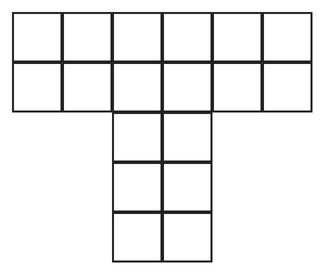
(b)
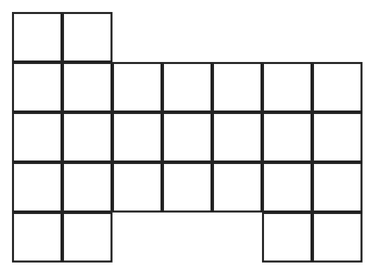 Solve with AI
Written solution
Solution:
Concept: Each small square has an area of 1 sq. cm. So the area of a figure made of squares is the number of squares in it.
Step 1 — Figure (a).
The top part has 2 rows of 6 squares. The lower part has 3 rows of 2 squares. We add them.
Step 2 — Figure (b).
We count column by column. The left 2 columns have 5 squares each, the middle 3 columns have 3 squares each and the right 2 columns have 4 squares each.
Watch out: Count in rows or columns and mark the ones you have counted, so that no square is counted twice.
Therefore, (a) 18 sq. cm; (b) 27 sq. cm.
- 103 marks
Question 10
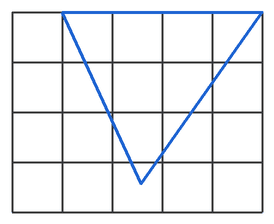
Find the approximate area of the following figures:
(a)
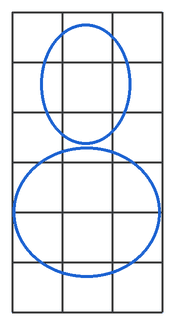
(b)

(c)
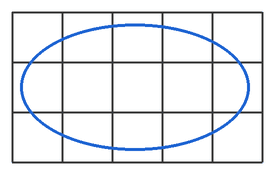
(d)
 Solve with AI
Written solution
Solution:
Concept: A figure with curved or slanting sides does not cover whole squares. We find its area only approximately, by counting squares. Each square is 1 cm².
Step 1 — The counting rule.
We count every full square. We also count a square that is half or more inside the figure as 1. We leave out squares that are less than half inside.
Step 2 — Figure (a).
There are 3 full squares and 6 squares that are half or more inside.
Step 3 — Figure (b).
There are 2 full squares and 5 squares that are half or more inside.
Step 4 — Figure (c).
There are 3 full squares and 8 squares that are half or more inside.
Step 5 — Figure (d).
There are 3 full squares and 4 squares that are half or more inside.
Watch out: A square that is just touched by the outline is less than half inside, so leave it out.
Note: Your count may differ by one square, because the area is only approximate.
Therefore, the approximate areas are (a) 9 cm²; (b) 7 cm²; (c) 11 cm²; (d) 7 cm².
- 113 marks
Question 11
Determine the area of rectangles whose lengths and breadths are given below :
Length Breadth Area (a) 10 m 7 m (b) 15 cm 20 cm (c) 25 cm 16 cm (d) 18 cm 12 cm (e) 8 dm 6 dm (f) 14 dm 11 dm (g) 12 dm 9 dm (h) 5 m 25 cm Solve with AIWritten solution
Solution:
Concept: The area of a figure is the amount of surface it covers, measured in square units (cm², m²). For a rectangle, Area = length × breadth. For a square, Area = side × side. Both lengths must be in the same unit.
Step 1 — Part (a).
Both sides are in m, so we multiply them.
Step 2 — Part (b).
Both sides are in cm, so we multiply them.
Step 3 — Part (c).
Both sides are in cm, so we multiply them.
Step 4 — Part (d).
Both sides are in cm, so we multiply them.
Step 5 — Part (e).
Both sides are in dm, so we multiply them.
Step 6 — Part (f).
Both sides are in dm, so we multiply them.
Step 7 — Part (g).
Both sides are in dm, so we multiply them.
Step 8 — Part (h).
The length is in metres and the breadth is in cm. We write 5 m as 500 cm.
Watch out: Area is in square units: m², cm² or dm², not m or cm.
Therefore, (a) 70 m²; (b) 300 cm²; (c) 400 cm²; (d) 216 cm²; (e) 48 dm²; (f) 154 dm²; (g) 108 dm²; (h) 12,500 cm².
- 123 marks
Question 12
Determine the area of a square whose one side is:
Side Area (a) 1 m 10 cm (b) 5 m 25 cm (c) 2 cm 4 mm (d) 4 cm 5 mm (e) 1 m 6 d m (f) 3.5 m Solve with AIWritten solution
Solution:
Concept: The area of a figure is the amount of surface it covers, measured in square units (cm², m²). For a rectangle, Area = length × breadth. For a square, Area = side × side. Both lengths must be in the same unit.
Step 1 — Part (a).
We write 1 m 10 cm as 110 cm.
Step 2 — Part (b).
We write 5 m 25 cm as 525 cm.
Step 3 — Part (c).
We write 2 cm 4 mm as 24 mm.
Step 4 — Part (d).
We write 4 cm 5 mm as 45 mm.
Step 5 — Part (e).
We write 1 m 6 dm as 16 dm, since 1 m is 10 dm.
Step 6 — Part (f).
The side is already in metres.
Watch out: 1 m 6 dm is 16 dm, because 1 m is 10 dm (not 100 dm).
Therefore, (a) 12,100 cm²; (b) 2,75,625 cm²; (c) 576 mm²; (d) 2,025 mm²; (e) 256 dm²; (f) 12.25 m².
- 133 marks
Question 13
Study and complete the table.
Length Breadth Area Rough Calculation (a) 50 cm — 300 cm² (b) — 12 m 156 m² (c) — 21 m 504 cm² (d) 4 m — 12 m² (e) 4 m — 72 m² Solve with AIWritten solution
Solution:
Concept: If we know the area and one side of a rectangle, we can find the other side by dividing: breadth = area ÷ length, and length = area ÷ breadth.
Step 1 — Part (a).
We know the length and the area, so we divide the area by the length.
Rough check: 50 × 6 = 300.
Step 2 — Part (b).
We know the breadth, so we divide the area by the breadth.
Rough check: 12 × 13 = 156.
Step 3 — Part (c).
We divide the area by the breadth.
Rough check: 21 × 24 = 504.
Step 4 — Part (d).
We divide the area by the length.
Rough check: 4 × 3 = 12.
Step 5 — Part (e).
We divide the area by the length.
Rough check: 4 × 18 = 72.
Watch out: Check each answer by multiplying back: length × breadth must give the area.
Note: In (c) the area is printed as 504 cm², but the breadth is 21 m. We take the area as 504 m², so the units match.
Therefore, (a) breadth 6 cm; (b) length 13 m; (c) length 24 m; (d) breadth 3 m; (e) breadth 18 m.
- 143 marks
Question 14
Mr. Seth has a beautiful lawn in his garden. Its area is 98 m² and its length is 14 m. What is its breadth ?
Solve with AIWritten solution
Solution:
Concept: If we know the area and one side of a rectangle, we can find the other side by dividing: breadth = area ÷ length, and length = area ÷ breadth.
Given: Area 98 m²; length 14 m.
Step 1 — Divide the area by the length.
We know the area and the length of the lawn.
Watch out: Divide the area by the length; do not take the length away from the area.
Therefore, the breadth of the lawn is 7 m.
- 153 marks
Question 15
The size of a square field is 35 m long. Find the area of the field. Find also the cost of levelling the field at the rate of ₹ 5 per sq. metre.
Solve with AIWritten solution
Solution:
Concept: The area of a figure is the amount of surface it covers, measured in square units (cm², m²). For a rectangle, Area = length × breadth. For a square, Area = side × side. Both lengths must be in the same unit.
Given: A square field of side 35 m; ₹ 5 per sq. metre.
Step 1 — Find the area.
The field is a square of side 35 m.
Step 2 — Find the cost.
Levelling costs ₹ 5 for each square metre.
So the cost is ₹ 6,125.
Watch out: The rate is per square metre, so multiply it by the area, not the perimeter.
Therefore, the area is 1,225 m², and levelling costs ₹ 6,125.
- 163 marks
Question 16
A swimming pool is 15 m long and covers an area of 135 m². Find its breadth. Also find its perimeter.
Solve with AIWritten solution
Solution:
Concept: If we know the area and one side of a rectangle, we can find the other side by dividing: breadth = area ÷ length, and length = area ÷ breadth. The perimeter of a figure is the distance all the way round it. For a rectangle, we go along the length and the breadth twice, so Perimeter = 2 × (length + breadth). For a square, all four sides are equal, so Perimeter = 4 × side. Both lengths must be in the same unit.
Given: Length 15 m; area 135 m².
Step 1 — Find the breadth.
We divide the area by the length.
Step 2 — Find the perimeter.
Now we know both sides.
Watch out: Area is in m² and perimeter in m. Do not mix them up.
Therefore, the breadth is 9 m and the perimeter is 48 m.
- 173 marks
Question 17
A rectangular field is 48 m long and 40 m broad. Find the cost of levelling the field at the rate of ₹ 3 per sq. metre.
Solve with AIWritten solution
Solution:
Concept: The area of a figure is the amount of surface it covers, measured in square units (cm², m²). For a rectangle, Area = length × breadth. For a square, Area = side × side. Both lengths must be in the same unit.
Given: A field 48 m by 40 m; ₹ 3 per sq. metre.
Step 1 — Find the area.
We multiply the length and the breadth.
Step 2 — Find the cost.
Levelling costs ₹ 3 for each square metre.
So the cost is ₹ 5,760.
Watch out: Find the area first; the rate is for each square metre.
Therefore, levelling the field costs ₹ 5,760.
- 183 marks
Question 18
The area of a hall is 1620 m². The breadth of the hall is 36 m. Find the length of the hall. Also find the perimeter of the hall.
Solve with AIWritten solution
Solution:
Concept: If we know the area and one side of a rectangle, we can find the other side by dividing: breadth = area ÷ length, and length = area ÷ breadth. The perimeter of a figure is the distance all the way round it. For a rectangle, we go along the length and the breadth twice, so Perimeter = 2 × (length + breadth). For a square, all four sides are equal, so Perimeter = 4 × side. Both lengths must be in the same unit.
Given: Area 1620 m²; breadth 36 m.
Step 1 — Find the length.
We divide the area by the breadth.
Step 2 — Find the perimeter.
Now we know both sides.
Watch out: Check: 45 × 36 = 1620, so the length is right.
Therefore, the length is 45 m and the perimeter is 162 m.
- 193 marks
Question 19
The perimeter of a classroom is 42 m. If the length of the classroom is 12 m, find the breadth of the classroom and hence find the area of the classroom.
Solve with AIWritten solution
Solution:
Concept: The perimeter of a figure is the distance all the way round it. For a rectangle, we go along the length and the breadth twice, so Perimeter = 2 × (length + breadth). For a square, all four sides are equal, so Perimeter = 4 × side. Both lengths must be in the same unit. The area of a figure is the amount of surface it covers, measured in square units (cm², m²). For a rectangle, Area = length × breadth. For a square, Area = side × side. Both lengths must be in the same unit.
Given: Perimeter 42 m; length 12 m.
Step 1 — Find length + breadth.
The perimeter is 2 × (length + breadth), so half the perimeter is length + breadth.
Step 2 — Find the breadth.
We take away the length.
Step 3 — Find the area.
Now we multiply the length and the breadth.
Watch out: Do not subtract 12 from 42. First halve the perimeter, because it holds the length and the breadth twice.
Therefore, the breadth is 9 m and the area is 108 m².
- 203 marks
Question 20
The perimeter of a square cardboard is 1 m. Find its area in cm².
Solve with AIWritten solution
Solution:
Concept: The perimeter of a figure is the distance all the way round it. For a rectangle, we go along the length and the breadth twice, so Perimeter = 2 × (length + breadth). For a square, all four sides are equal, so Perimeter = 4 × side. Both lengths must be in the same unit. The area of a figure is the amount of surface it covers, measured in square units (cm², m²). For a rectangle, Area = length × breadth. For a square, Area = side × side. Both lengths must be in the same unit.
Given: A square with perimeter 1 m.
Step 1 — Change the perimeter into cm.
The area is wanted in cm², so we write 1 m as 100 cm.
Step 2 — Find the side.
A square has 4 equal sides.
Step 3 — Find the area.
We multiply the side by itself.
Watch out: Change 1 m into 100 cm first, so the area comes out in cm².
Therefore, the area of the cardboard is 625 cm².
- 213 marks
Question 21
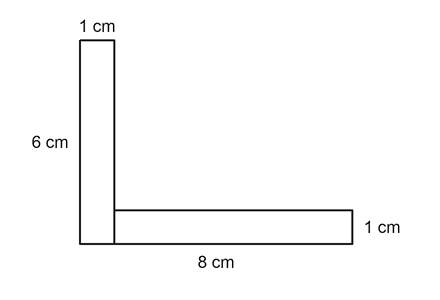
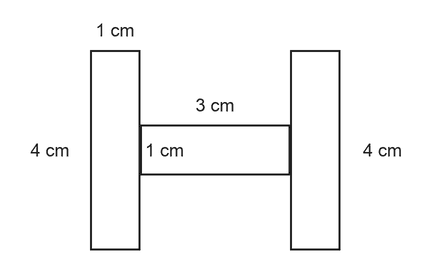
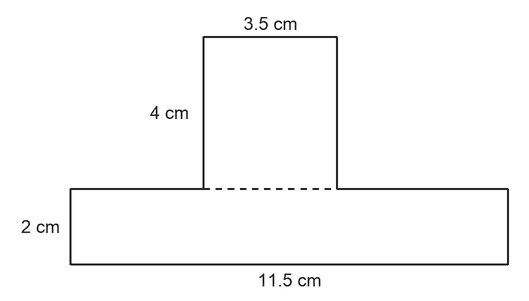
Find the areas of the following figures by dividing them into rectangles, measurements are given in centimetres.
(a)
(b)
(c)

(d)
 Solve with AI
Written solution
Solution:
Concept: To find the area of a shape made of rectangles, we split it into rectangles, find the area of each (length × breadth) and add them.
Step 1 — Figure (a).
We split the L-shape into the upright (6 cm by 1 cm) and the foot. The whole bottom is 8 cm, and the upright takes 1 cm of it, so the foot is 8 − 1 = 7 cm long and 1 cm high.
Step 2 — Figure (b).
We split the H-shape into two uprights (4 cm by 1 cm each) and the middle bar (3 cm by 1 cm).
Step 3 — Figure (c).
The dashed line splits it into a top rectangle (6 cm by 2.5 cm) and a bottom rectangle (3 cm by 1.5 cm).
Step 4 — Figure (d).
The dashed line splits it into a top rectangle (3.5 cm by 4 cm) and a base rectangle (11.5 cm by 2 cm).
Watch out: Do not count the corner square twice. In (a) the foot is 7 cm long, not 8 cm.
Therefore, (a) 13 cm²; (b) 11 cm²; (c) 19.5 cm²; (d) 37 cm².
- 223 marks
Question 22
How many square tiles of side 30 cm will be required for a floor 18 m long and 15 m wide? If the cost of a tile is ₹ 2.50, find the cost for covering the floor with the tiles.
Solve with AIWritten solution
Solution:
Concept: To find how many tiles cover a floor, we divide the area of the floor by the area of one tile. Both areas must be in the same unit, so we change metres into centimetres first (1 m = 100 cm).
Given: Floor 18 m by 15 m; square tiles of side 30 cm; ₹ 2.50 a tile.
Step 1 — Find the area of the floor.
The tile is in cm, so we write 18 m as 1800 cm and 15 m as 1500 cm.
Step 2 — Find the area of one tile.
Each tile is a square of side 30 cm.
Step 3 — Find the number of tiles.
We divide the floor area by the tile area.
So 3000 tiles are needed. They fit exactly: 60 along the length and 50 along the width.
Step 4 — Find the cost.
Each tile costs ₹ 2.50.
So the cost is ₹ 7,500.
Watch out: Change the floor's sides into cm first. Mixing m and cm gives a wrong count.
Therefore, 3,000 tiles are needed, and they cost ₹ 7,500.
- 233 marks
Question 23
660 tiles each 15 cm long and 12 cm wide are required to pave a corridor. Find the area of the corridor. Give your answer first in sq. cm. and then in sq. m.
Solve with AIWritten solution
Solution:
Concept: The area of a floor covered by tiles is the number of tiles × the area of one tile. Since 1 m is 100 cm, 1 m² is 100 × 100 cm², or 10,000 cm².
Given: 660 tiles, each 15 cm by 12 cm.
Step 1 — Find the area of one tile.
Each tile is 15 cm by 12 cm.
Step 2 — Find the area of the corridor.
660 tiles cover the corridor exactly, so we multiply.
Step 3 — Change into sq. m.
A square metre is 100 cm by 100 cm, so it holds 10,000 cm². So we divide by 10,000.
Watch out: 1 m² is 10,000 cm², not 100 cm².
Therefore, the area of the corridor is 1,18,800 sq. cm, or 11.88 sq. m.
- 243 marks
Question 24
9000 square tiles of size 20 cm are required to pave the floor of a hall. Find the area of the floor of the hall in sq. m.
Solve with AIWritten solution
Solution:
Concept: The area of a floor covered by tiles is the number of tiles × the area of one tile. Since 1 m = 100 cm, 1 m² = 10,000 cm².
Given: 9000 square tiles of side 20 cm.
Step 1 — Find the area of one tile.
Each tile is a square of side 20 cm.
Step 2 — Find the area of the floor.
9000 tiles cover the floor.
Step 3 — Change into sq. m.
We divide by 10,000, since 1 m² = 10,000 cm².
Watch out: A tile "of size 20 cm" is a square of side 20 cm, so one tile is 400 cm².
Therefore, the area of the floor is 360 sq. m.
- 253 marks
Question 25
A courtyard measures 28 m by 21 m. How many bricks each 25 cm by 21 cm are required for paving the courtyard? Find the cost of paving the floor with bricks if a brick costs 50 paise.
Solve with AIWritten solution
Solution:
Concept: To find how many tiles cover a floor, we divide the area of the floor by the area of one tile. Both areas must be in the same unit, so we change metres into centimetres first (1 m = 100 cm).
Given: Courtyard 28 m by 21 m; bricks 25 cm by 21 cm; 50 paise a brick.
Step 1 — Find the area of the courtyard.
We write 28 m as 2800 cm and 21 m as 2100 cm.
Step 2 — Find the area of one brick.
Each brick covers 25 cm by 21 cm.
Step 3 — Find the number of bricks.
We divide the courtyard area by the brick area.
So 11,200 bricks are needed.
Step 4 — Find the cost.
Each brick costs 50 paise. That is half a rupee, ₹ 0.50.
So the cost is ₹ 5,600.
Watch out: 50 paise is ₹ 0.50, not ₹ 50.
Therefore, 11,200 bricks are needed, and they cost ₹ 5,600.
- 263 marks
Question 26
Find the area of the shaded portion.
(a)

(b)
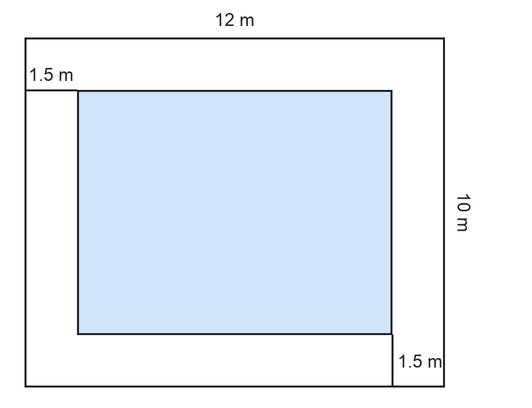
(c)

(d)
 Solve with AI
Written solution
Solution:
Concept: A path or border of the same width all round adds that width on BOTH sides. So it changes each length by twice its width. The area of the border = the area of the bigger rectangle − the area of the smaller rectangle.
Step 1 — Figure (a).
The shaded rectangle is 1 m inside the outer one on every side. So it is 2 × 1 m shorter each way: 8 − 2 = 6 m long and 6 − 2 = 4 m wide.
Step 2 — Figure (b).
The gap is 1.5 m on every side, so each side is 3 m shorter: 12 − 3 = 9 m and 10 − 3 = 7 m.
Step 3 — Figure (c).
The gap is 2 m on every side, so each side is 4 m shorter: 18 − 4 = 14 m and 12 − 4 = 8 m.
Step 4 — Figure (d).
Here the border is shaded. The outer rectangle is 1.5 m bigger on every side than the inner 5 m by 2 m one: 5 + 3 = 8 m long and 2 + 3 = 5 m wide.
Watch out: A gap on every side counts twice in each direction: 1.5 m on both sides makes 3 m.
Therefore, (a) 24 m²; (b) 63 m²; (c) 112 m²; (d) 30 m².
- 273 marks
Question 27
A garden 18 m by 15 m is surrounded by a path of uniform width 2.25 m.
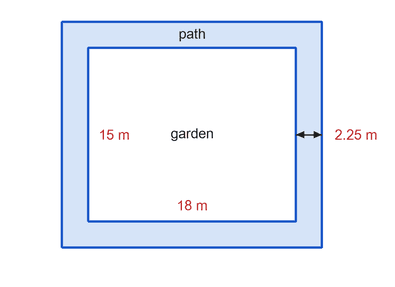
Find the area of the path.
Solve with AIWritten solution
Solution:
Concept: A path or border of the same width all round adds that width on BOTH sides. So it changes each length by twice its width. The area of the border = the area of the bigger rectangle − the area of the smaller rectangle.
Given: Garden 18 m by 15 m; path 2.25 m wide all round.
Step 1 — Find the outer rectangle.
The path of width 2.25 m is on both sides, so it adds 4.5 m to each side.
Step 2 — Find the garden.
The garden alone is 18 m by 15 m.
Step 3 — Find the path.
The path is the outer rectangle without the garden.
Watch out: The path is outside the garden, so add 2 × 2.25 m to each side; do not subtract.
Therefore, the area of the path is 168.75 m².
- 283 marks
Question 28
A table cloth is 1.5 m by 1 m. It is bordered with lace of uniform width of 15 cm.
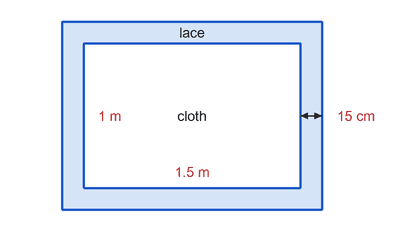
Find the area of the border.
Solve with AIWritten solution
Solution:
Concept: A path or border of the same width all round adds that width on BOTH sides. So it changes each length by twice its width. The area of the border = the area of the bigger rectangle − the area of the smaller rectangle.
Given: Cloth 1.5 m by 1 m; lace border 15 cm wide all round.
Step 1 — Find the cloth with its border.
The lace of width 15 cm is on both sides, which adds 30 cm, or 0.3 m, to each side.
Step 2 — Find the cloth.
The cloth alone is 1.5 m by 1 m.
Step 3 — Find the border.
The border is the bigger rectangle without the cloth.
Watch out: Change 15 cm into 0.15 m before adding it to lengths in metres.
Therefore, the area of the border is 0.84 m².
- 293 marks
Question 29
A carpet is placed in a room leaving a border of 1 m wide all around the room.
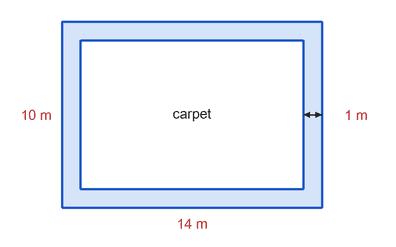
If the room is 14 m long and 10 m wide, find the area uncovered by the carpet.
Solve with AIWritten solution
Solution:
Concept: A path or border of the same width all round adds that width on BOTH sides. So it changes each length by twice its width. The area of the border = the area of the bigger rectangle − the area of the smaller rectangle.
Given: Room 14 m by 10 m; border 1 m wide all round.
Step 1 — Find the room.
The room is 14 m by 10 m.
Step 2 — Find the carpet.
The 1 m border is on both sides, so the carpet is 2 m shorter each way: 12 m by 8 m.
Step 3 — Find the uncovered part.
We take the carpet away from the room.
Watch out: The carpet is inside the room, so take 2 × 1 m from each side.
Therefore, 44 m² of the floor is not covered.
- 303 marks
Question 30
A coir carpet is placed in a hall so as to leave a border of 2 m wide all around the hall.
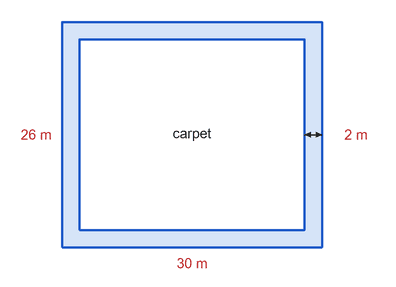
If the hall is 30 m by 26m, find the area of the carpet and also the area uncovered by the carpet.
Solve with AIWritten solution
Solution:
Concept: A path or border of the same width all round adds that width on BOTH sides. So it changes each length by twice its width. The area of the border = the area of the bigger rectangle − the area of the smaller rectangle.
Given: Hall 30 m by 26 m; border 2 m wide all round.
Step 1 — Find the carpet.
The 2 m border is on both sides, so the carpet is 4 m shorter each way: 26 m by 22 m.
Step 2 — Find the hall.
The hall is 30 m by 26 m.
Step 3 — Find the uncovered part.
We take the carpet away from the hall.
Watch out: Subtract 4 m (2 m on each side), not 2 m.
Therefore, the carpet's area is 572 m² and 208 m² is not covered.
- 313 marks
Question 31
Arnav and Akash go for jogging every morning. Arnav jogs around a square park of side 95 m twice, while Akash jogs around a rectangular park of length 90 m and width 85 m twice. Find who covers greater distance and how much.
Solve with AIWritten solution
Solution:
Concept: The perimeter of a figure is the distance all the way round it. For a rectangle, we go along the length and the breadth twice, so Perimeter = 2 × (length + breadth). For a square, all four sides are equal, so Perimeter = 4 × side. Both lengths must be in the same unit.
Given: Arnav: square park of side 95 m, twice; Akash: park 90 m by 85 m, twice.
Step 1 — Arnav's distance.
The square park has a perimeter of 4 × 95 m, and he goes round twice.
Step 2 — Akash's distance.
The rectangular park has a perimeter of 2 × (90 + 85) m, and he goes round twice.
Step 3 — Compare.
Arnav covers more. We find how much more.
Watch out: Both boys go round twice, so double each perimeter.
Therefore, Arnav covers the greater distance, by 60 m.
What Class 5 Maths Ch 17 covers
The sections of the chapter, in the order the book takes them. Every question above comes from one of these.
- 01Perimeter
- 02Area
- 03Paving the Floors
- 04Area of Path, Verandahs and Borders
More ways to study this chapter
The same chapter asked three other ways. Practise it, revise it, and see what the board has set on Ch 17 before.
Class 5 Maths Ch 17 questions students ask
How many questions are there in Class 5 Maths Ch 17?
31 questions. Every one is solved step by step on this page.
Are these Class 5 Maths solutions free?
Yes. Every question and its full working is free to read, with no account needed.
Can I download the Class 5 Maths Ch 17 solutions as a PDF?
There is no PDF to download. Every solution is on this page instead, which means it is searchable, always the current syllabus, and readable on a phone. Use your browser's print option if you want it on paper.