
Question 765 marksMedium
What is double circulation? Explain the importance and a schematic diagram of both systemic and pulmonary circulation.
Confirming your payment
Sign up now and get 250 free tokens.
Body Fluids and Circulation · Question 76 of 76
What is double circulation? Explain the importance and a schematic diagram of both systemic and pulmonary circulation.
Solution:
Concept: In mammals and birds the heart is completely divided into right and left halves.
Step 1 — Meaning: In double circulation blood passes through the heart twice during one complete round of the body, once in the pulmonary circulation and once in the systemic circulation.
Step 2 — Pulmonary circulation: Deoxygenated blood is pumped by the right ventricle through the pulmonary trunk and arteries to the lungs; oxygenated blood returns through the pulmonary veins to the left atrium.
Step 3 — Systemic circulation: Oxygenated blood is pumped by the left ventricle into the aorta, and through arteries and arterioles to the capillaries of all body tissues; deoxygenated blood returns through veins and the superior and inferior venae cavae to the right atrium.
Step 4 — Schematic diagram: The schematic shows both circuits joined at the heart.
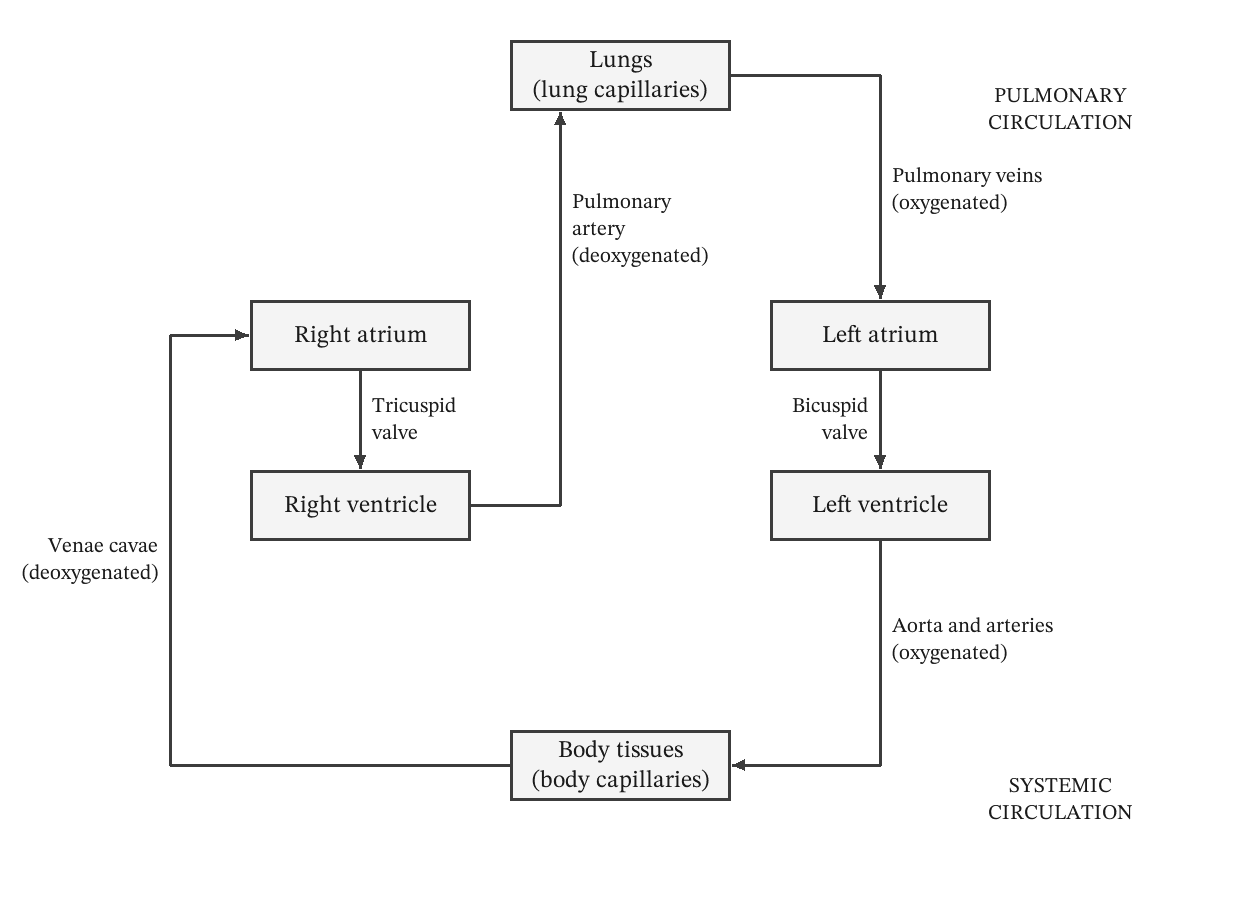
Step 5 — Importance: Oxygenated and deoxygenated blood never mix, so tissues receive fully oxygenated blood. Blood is pumped twice, so the lungs get it at low pressure (protecting the thin alveoli) and the body gets it at high pressure. This efficient supply of oxygen supports the high metabolic rate and constant body temperature of birds and mammals.
Therefore, double circulation is the passage of blood twice through the heart, through the pulmonary and systemic circuits; it keeps oxygenated and deoxygenated blood separate and supplies oxygen efficiently.