
Question 975 marksMedium
Draw a well-labelled diagram showing internal structure of a chloroplast. Give functions of various types of plastids.
Confirming your payment
Sign up now and get 250 free tokens.
Cell - The Unit of Life · Question 97 of 100
Draw a well-labelled diagram showing internal structure of a chloroplast. Give functions of various types of plastids.
Solution:
Concept: Plastids are double-membraned, semi-autonomous organelles of plant cells; chloroplasts are the green ones.
Step 1 — Structure: A chloroplast is lens- or disc-shaped with a double envelope; inside is a fluid stroma containing grana (stacks of disc-like thylakoids) linked by stroma lamellae; the stroma also holds circular DNA, 70S ribosomes, starch grains and lipid droplets (plastoglobules).
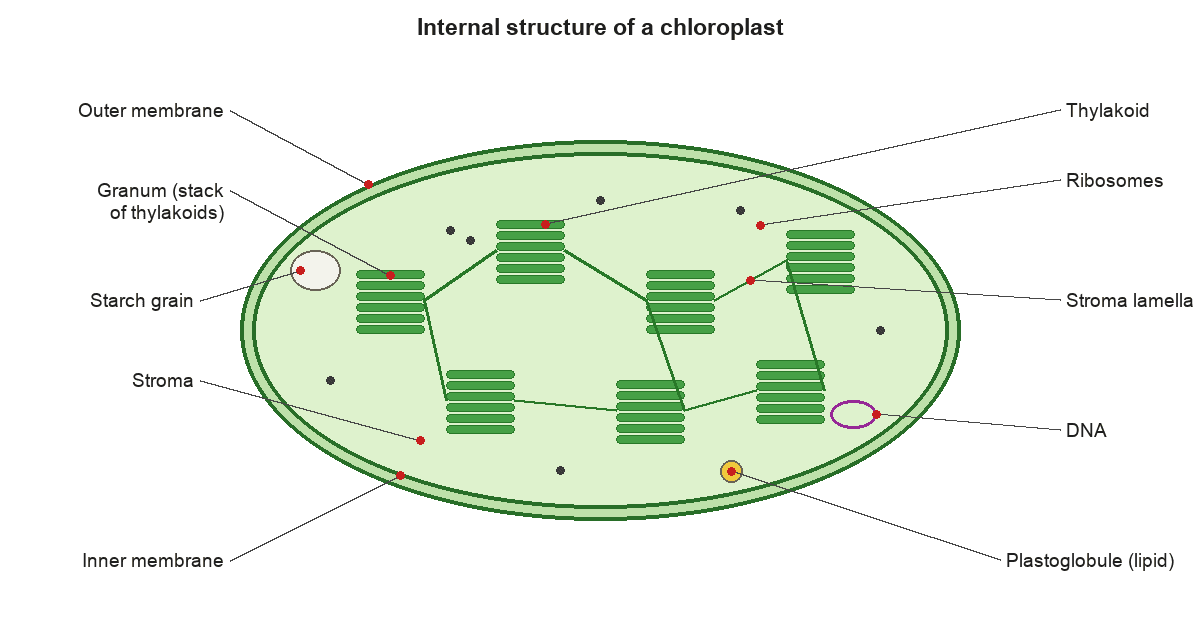
Step 2 — Chloroplasts: They are green plastids with chlorophyll (and carotenoids); thylakoids carry out the light reactions and the stroma the dark reactions of photosynthesis.
Step 3 — Chromoplasts: They are yellow, orange or red plastids with carotenoids; they colour petals and fruits, attracting pollinators and seed dispersers.
Step 4 — Leucoplasts: They are colourless plastids that store food: amyloplasts (starch, e.g. potato), elaioplasts (oils and fats) and aleuroplasts (proteins).
Step 5 — Interconversion: Plastid types can change into one another, e.g. green tomato chloroplasts become red chromoplasts on ripening.
Therefore, a chloroplast has a double envelope, stroma, grana and stroma lamellae; chloroplasts photosynthesise, chromoplasts give colour and leucoplasts store food.