
Question 533 marksEasy
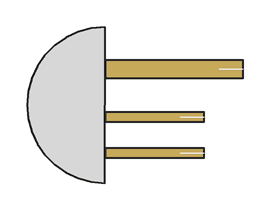
The diagram in Fig. 9.26 shows a three pin plug. Label the three pins.
(a) Why is the top pin thicker and longer than the other two ?
(b) Why are the pins splitted at the ends ?
Confirming your payment
Sign up now and get 250 free tokens.
Household Circuits · Question 53 of 73
The diagram in Fig. 9.26 shows a three pin plug. Label the three pins.
(a) Why is the top pin thicker and longer than the other two ?
(b) Why are the pins splitted at the ends ?
Solution:
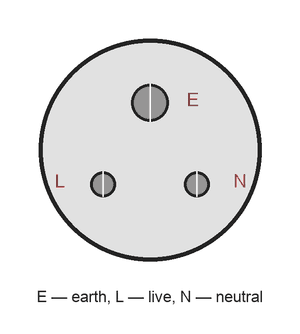
Concept: A three-pin plug has a top pin for earth (E), longer and thicker than the other two. Seen from the pin side, the pin on the left is live (L) and the pin on the right is neutral (N). The socket is the mirror image: seen from the front, the big top hole is earth, the right hole is live and the left hole is neutral.
Step 1 — Label the pins.
The top pin, the thicker and longer one, is the earth (E) pin. Seen from the pin side, the lower left pin is live (L) and the lower right pin is neutral (N).
(a)
Step 2 — Why the top pin is longer.
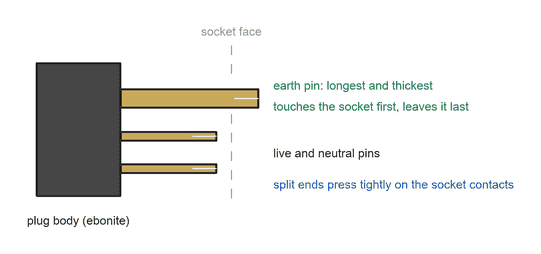
The earth pin makes contact first when the plug is put in, and is disconnected last when it is pulled out. So the appliance is earthed all the time it is joined to the supply; if it is faulty, the current goes to the earth and the fuse blows as soon as the live pin is connected.
Step 3 — Why the top pin is thicker.
A thicker pin cannot be pushed into the live or the neutral hole of the socket by mistake.
(b)
Step 4 — Why the pins are split.
The split ends act like springs. They press firmly against the socket contacts and make a tight, good electrical contact, which prevents loose connections, sparking and burning of the plug or the socket.
Therefore, the top pin is earth and the other two are live (left) and neutral (right); (a) the earth pin is longer so that it connects first and disconnects last, and thicker so that it cannot enter the wrong hole; (b) the pins are split to fit tightly in the socket.