
Question 451 markMCQEasy
The formation of a covalent bond between two atoms is favoured when :
P both the atoms have a large difference in electro-negativity
Q both the atoms have high electron affinity
R both the atoms have high electronegativity
Confirming your payment
Sign up now and get 250 free tokens.
Chemical Bonding · Question 45 of 71
The formation of a covalent bond between two atoms is favoured when :
P both the atoms have a large difference in electro-negativity
Q both the atoms have high electron affinity
R both the atoms have high electronegativity
(A) Only P
(B) Only Q
(C) Both P and Q
(D) Both Q and R
Answer: (D) Both Q and R
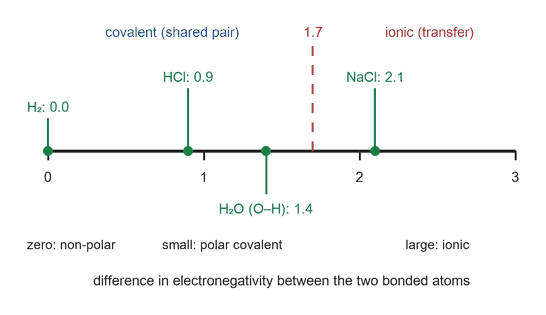
Concept: A covalent bond forms when both atoms want electrons: both have a high electron affinity and a high electronegativity, so neither can take electrons from the other, and they share.
Step 1 — Judge Q and R.
Statement Q (both atoms have high electron affinity) and statement R (both atoms have high electronegativity) are conditions for a covalent bond.
Step 2 — Judge P.
Statement P is false: a large electronegativity difference lets one atom take electrons completely, which gives an ionic bond.
Step 3 — Pick the option.
The option that contains Q and R and leaves out P is the answer.
Why the other options are wrong:
Therefore, the formation of a covalent bond is favoured by Q and R, option (D).