
Question 121 markMCQEasy
The main nitrogenous waste formed in the human body :
Confirming your payment
Sign up now and get 250 free tokens.
The Excretory System · Question 12 of 39
The main nitrogenous waste formed in the human body :
(A) Uric acid
(B) Ammonia
(C) Urea
(D) Creatinine
Answer: (C) Urea
Concept: the nitrogenous wastes of the human body are mainly urea, with smaller amounts of creatinine and uric acid.
Step 1 — Where urea comes from.
Extra amino acids are broken down in the liver and their nitrogen is turned into urea, which the kidneys pass out in the urine.
Step 2 — Compare the amounts.
The book's table of urine constituents shows urea as the largest organic constituent (2.3 g per litre), against creatinine (1.5 g) and uric acid (0.7 g).
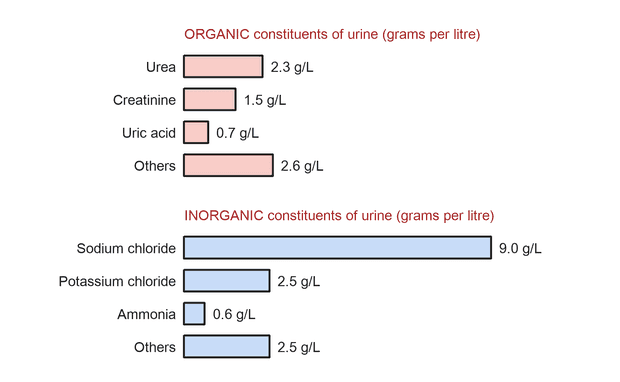
Why the other options are wrong:
Therefore, the main nitrogenous waste is urea, option (C).