
Question 5315 marksMedium
Write important role/roles of the following :
(a) Tonsils
(b) Spleen
(c) Hepatic portal vein
(d) Basophils
(e) S.A.N.
Confirming your payment
Sign up now and get 250 free tokens.
The Circulatory System · Question 53 of 65
Write important role/roles of the following :
(a) Tonsils
(b) Spleen
(c) Hepatic portal vein
(d) Basophils
(e) S.A.N.
Solution:
Concept: state the main jobs of each structure, with the reason each job matters.
Step 1 — (a) Tonsils.
They are lymph glands at the sides of the throat. They trap and destroy germs entering through the mouth and nose, produce lymphocytes, and, like lymph nodes, localise an infection so it does not spread through the body.
Step 2 — (b) Spleen.
It acts as a blood reservoir, releasing stored blood in an emergency such as haemorrhage or stress. It produces lymphocytes and destroys worn-out RBCs. In the embryo it also produces RBCs.
Step 3 — (c) Hepatic portal vein.
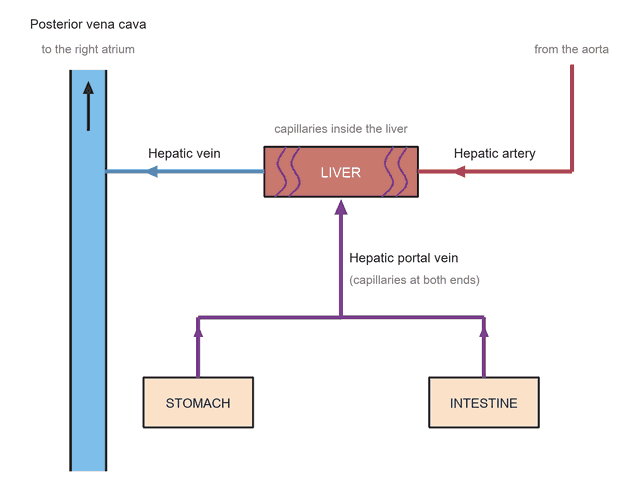
It brings the food absorbed in the stomach and intestine first to the liver. There, excess sugar is stored as glycogen, excess amino acids are broken down (deamination), and harmful substances are made harmless (detoxification), before the blood reaches the rest of the body.
Step 4 — (d) Basophils.
They release histamine during inflammation. Histamine widens the blood vessels, so more blood, and more WBCs, reach the injured or infected spot.
Step 5 — (e) S.A.N. (sino-atrial node).
It is the pacemaker: the impulse for each heart beat starts here, in the wall of the right auricle near the opening of the superior vena cava, and passes on through the AVN, the bundle of His and the Purkinje fibres.

Therefore, the roles are: tonsils, defence against germs; spleen, blood reservoir, lymphocytes, destroying old RBCs; hepatic portal vein, taking absorbed food to the liver first; basophils, histamine for inflammation; S.A.N., starting each heart beat.