
Opening your dashboard
Class 12 Biology Chapter 10 Human Health and Diseases: Competency-Based Questions (CBQ)
40 questions on Chapter 10, each worked through on its own page with the AI tutor. Class 12 Biology, ICSE 2026-27.
40 questions
1–10 marks · Mixed difficulty
- 14 marks
Question 1
After a community lunch at a village fair in Bihar, many guests fell ill with a fever that rose every afternoon, loss of appetite, a coated tongue and stomach pain. The illness began 12 to 18 days after the lunch, and the Widal test was positive in the patients. A health team asked all 200 guests what they had eaten. (Hypothetical data.)
Food item Ate it: number Ate it: fell ill Did not eat it: number Did not eat it: fell ill Rice and dal 190 31 10 1 Paneer curry (served hot) 160 26 40 6 Raw salad with chutney 120 30 80 2 Kheer (boiled milk) 150 24 50 8 (a) Work out the percentage of guests who fell ill among those who ate the raw salad and among those who did not. Which food most likely carried the infection?
(b) Why did the guests fall ill nearly two weeks after the lunch and not on the same day?
(c) The cook who cut the salad with bare hands had never been ill, yet the bacteria were found in his stools. What is such a person called? Suggest two measures that would have prevented this outbreak.
- 24 marks
Question 2
A 16-year-old girl in Kolkata has had a sudden high fever, severe headache and pain in her joints and muscles since the rains began. Her test confirms dengue. Her platelet counts were (Hypothetical data):
Day of illness 1 2 3 4 5 6 Platelets per microlitre of blood 210,000 180,000 120,000 70,000 45,000 95,000 (a) On which day was the count lowest? By what percentage had it fallen from day 1 to that day?
(b) While her count is falling, the family is told to watch for "alarming signs". Name two such signs and say why a falling platelet count makes them likely.
(c) An aunt suggests giving her aspirin for the fever and pain. What should the family do instead? Give two points of advice.
- 33 marks
Question 3
Mr Nair, an office worker in Kochi, felt perfectly well on 11 March. On 12 March he developed fever, sore throat, cough and body ache, and his laboratory report later confirmed swine flu (H1N1). His 6-year-old daughter fell ill on 14 March. (Hypothetical case.)
A person with swine flu can be contagious from one day before symptoms appear to seven days after falling sick; children can stay contagious for as long as 10 days.
(a) From which date could Mr Nair have passed the virus to his colleagues? Why is this a problem for controlling swine flu?
(b) Up to which date could Mr Nair, and up to which date could his daughter, still be contagious?
(c) Mr Nair's first doctor could not be sure from the symptoms alone that he had swine flu. Why? How was it confirmed?
- 43 marks
Question 4
In a school laboratory in Bengaluru, a lab assistant spread a harmless bacterium evenly over a nutrient plate. Students placed three paper discs of equal size on it:
- Disc P — soaked in tears
- Disc Q — soaked in saliva
- Disc R — soaked in distilled water
After a day, the plate was cloudy with bacteria except for clear rings around some discs. (Hypothetical data.)
Disc P (tears) Q (saliva) R (distilled water) Width of clear ring around disc (mm) 8 3 0 (a) Name the substance in tears and saliva that produced the clear rings, and state how it acts on bacteria.
(b) Why was disc R included in the experiment?
(c) To which type of barrier of innate immunity do tears and saliva belong? Suggest why a person whose eyes make too few tears gets eye infections more often.
- 54 marks
Question 5
A bacterium enters a cut on a farmer's hand. In a nearby lymph node, one B cell whose receptors fit the bacterium's antigen is stimulated and divides repeatedly. Suppose it goes through 12 rounds of division, and that of the cells formed, 1,024 become memory cells and the rest become plasma cells. Each plasma cell makes 2,000 antibody molecules per second. (Hypothetical numbers.)
(a) How many cells are formed after 12 rounds of division? How many antibody molecules do all the plasma cells together make in one minute?
(b) All these antibodies bind to the same antigen. Explain why.
(c) Plasma cells live for only a few days, yet the farmer fights off the same bacterium very quickly when it enters his body again years later. Explain.
- 63 marks
Question 6
A 12-year-old boy in Pune is bitten deeply on the leg by a stray dog. At the hospital, after the wound is cleaned, the doctor injects ready-made rabies antibodies around the wound and also starts a course of rabies vaccine on the same day.
(a) Which kind of immunity does each injection give the boy?
(b) Why does the doctor give both, instead of only one of them?
(c) The ready-made antibodies were obtained from horse blood. How are such antibodies produced?
- 73 marks
Question 7
A paediatric clinic compared 400 children from a metro city with 400 children from villages in the same state. (Hypothetical data.) Sneezing, a running nose or wheezing on exposure to house dust, pollen or pet fur was found in 72 of the metro children and 24 of the village children.
(a) Work out the percentage of affected children in each group. How many times more common is the problem in the metro group?
(b) What reason is suggested for allergies and asthma being more common in children of metro cities in India?
(c) During an attack, which chemical released by which cells causes these symptoms? A blood test of an affected child also shows more eosinophils than usual. What role are they thought to play?
- 83 marks
Question 8
A baby is born in a district hospital to a mother who is HIV-positive. An HIV-ELISA on the baby's blood soon after birth is positive. The doctor explains that this result does not prove that the baby is infected.
(a) Which class of antibody in the baby's blood could have come from the mother, and how did it reach the baby?
(b) Why does a positive HIV-ELISA not prove that the baby is infected?
(c) If the baby is not infected, how will the ELISA result change over the following months? Explain.
- 93 marks
Question 9
An occupational-health camp in an industrial area of Gujarat plans cancer screening for four groups of workers:
Group Main exposure at work W 2-naphthylamine in a dye factory X Asbestos dust in a cement-sheet unit Y Vinyl chloride in a plastic (PVC) plant Z Coal tar while laying roads (a) Which organ should be screened most carefully in group W, and which in group Y?
(b) Which two tissues are most at risk in group X?
(c) Many such chemicals act by altering the DNA of the cells they reach. Explain how this can turn a normal cell into a cancer cell.
- 103 marks
Question 10
At the burns unit of a hospital in Delhi, three kinds of skin graft are being considered for patients with deep burns:
- Graft P — skin taken from the patient's own thigh
- Graft Q — skin from an unrelated human donor
- Graft R — pig skin, used to cover a wound for a short time when human skin is not available
(a) Name the type of graft P, Q and R.
(b) Arrange P, Q and R from most likely to least likely to be accepted, and give the reason for this order.
(c) State two steps that improve the chance that graft Q is accepted.
- 111 mark
Question 11
Assertion (A): Koch's postulates cannot be used to show that a virus causes a disease.
Reason (R): Viruses cannot be grown in a pure culture on an artificial medium; they multiply only inside living cells.
- 121 mark
Question 12
Assertion (A): Boiling surgical instruments is enough to kill the spores of Clostridium tetani.
Reason (R): The spores of Clostridium tetani can survive for years in dust and soil.
- 131 mark
Question 13
Assertion (A): Neutrophils can kill bacteria that they have not engulfed.
Reason (R): Neutrophils change into macrophages after they reach the site of infection.
- 141 mark
Question 14
Assertion (A): A breast-fed baby is protected against many infections that enter through the gut.
Reason (R): IgG is the only antibody that can cross the placenta.
- 151 mark
Question 15
Assertion (A): A toxoid vaccine can make a child immune to a bacterial toxin without the toxin harming the child.
Reason (R): A toxoid is a toxin that has been inactivated but still keeps its antigenic properties.
- 161 mark
Question 16
Assertion (A): The thymus is a secondary lymphoid organ.
Reason (R): In the thymus, immature lymphocytes that come from the bone marrow mature into T cells.
- 171 mark
Question 17
Assertion (A): HIV infection does not spread through mosquito bites.
Reason (R): HIV has RNA as its genetic material and uses reverse transcriptase to make DNA copies of it.
- 181 mark
Question 18
Assertion (A): A leukaemia patient has a very high leucocyte count, yet catches infections easily.
Reason (R): Leukaemia is a cancer of mesodermal tissues such as bone, muscle and cartilage.
- 191 mark
Question 19
Four patients are admitted to a ward of a district hospital:
- P — his kidneys have slowly stopped working properly
- Q — she has a goitre because her diet lacked iodine
- R — he sneezes and his eyes water whenever the house is dusted
- S — she fractured her wrist in a fall
Which option classifies all four correctly?
- 201 mark
Question 20
In a forest-fringe village in Jharkhand, malaria cases keep appearing even after every patient in the village has been treated. Health workers find Plasmodium in the blood of monkeys in the nearby forest, but the monkeys show no illness. (Hypothetical case.) The monkeys here act as:
- 211 mark
Question 21
In a housing society in Chennai, every family sleeps under a mosquito net at night, yet several residents have fallen ill with fever, rash and severe, long-lasting joint pain diagnosed as chikungunya. The most likely reason the nets have not helped is that:
- 221 mark
Question 22
A purified protein from a bacterium is injected into a rabbit. The protein carries three different antigenic determinant sites. After some weeks, the rabbit's serum will most likely contain:
- 231 mark
Question 23
In a village in Rajasthan hit by two years of drought, many children who had been healthy since birth have become badly underfed. They now keep falling ill with infections that their well-fed cousins recover from easily. The best explanation is:
- 241 mark
Question 24
A 45-year-old woman notices that a mole on her back has grown and changed colour over a few months. A biopsy shows that it is cancerous and arose from the pigment-containing cells of the skin. This cancer is a:
- 251 mark
Question 25
To find small secondary tumours spread through a patient's body, doctors inject monoclonal antibodies against a cancer-specific antigen, coupled to a radioisotope, and then scan the body for the radiation. The tumours show up because:
- 2610 marks
Question 26
Match terms given in Column I with appropriate terms in Column II.
Column I Column II 1. Histamines (a) Antibody production 2. Complement proteins (b) Activation of B cells 3. IgE (c) Inflammatory response 4. T-cytotoxic cells (d) Processing of antigens 5. B cells (e) Passive immunity to foetus 6. T-helper cells (f) Pore formation 7. Antigen presenting cells (g) Killing of specific target cells 8. IgG (h) Allergy 9. IgM (i) AIDS 10. Tissue typing (j) HLA - 2710 marks
Question 27
Match terms given in Column I with appropriate terms in Column II.
Column I Column II 1. Typhoid (a) Elephantiasis 2. AIDS (b) H1N1 Virus 3. Malaria (c) E. coli 4. Filariasis (d) Plasmodium 5. Ascariasis (e) HIV retrovirus 6. Swine flu (f) Tapeworm 7. Fungal infection (g) Aedes aegypti 8. Diarrhoea (h) Ringworm 9. Taeniasis (i) Roundworm 10. Dengue (j) Bacteria—Salmonella species - 285 marks
Question 28
Read the source given and answer the questions that follow.
Acquired immune deficiency syndrome (AIDS) is an immunodeficiency disease caused by a retrovirus called human immunodeficiency virus (HIV). This retrovirus has RNA as its hereditary material which can replicate via DNA copies. These viruses have an amazing ability of making RNA copies of themselves which can then be recopied to make double-stranded DNA (RNA–DNA) and these DNA copies can be integrated randomly into one of the chromosomes of the host DNA. This is possible because they carry the gene for reverse transcription. The copying of RNA to DNA is done by enzyme RNA-dependent DNA polymerase or reverse transcriptase.
HIV selectively infects and kills T-helper cells. Depletion of T-helper cells weaken the acquired protective immune response of the body. HIV is a retrovirus that utilises reverse transcriptase to produce cDNA (DNA copy of RNA genes). cDNA integrates into the cell's chromosomes before it reproduces and makes copies of itself.
1. Which of the following statement is applicable to a retrovirus?
(a) has DNA as hereditary material (b) can form RNA from DNA (c) can form DNA from RNA (d) both (a) and (b)
2. The type of cells that AIDS virus destroys in the body are
(a) B lymphocytes (b) thrombocytes (c) T-helper cells (d) both (b) and (c)
3. RNA-dependent DNA polymerase can
(a) destroy immune system (b) form cDNA (c) copy host DNA (d) integrate RNA to host DNA
4. Which of the following is true for HIV?
(a) It can carry reverse transcription (b) It destroys the immune system of body (c) both (a) and (b) (d) it causes cancer in the body
5. The following type of DNA is called the cDNA
(a) DNA copy of viral RNA (b) host DNA (c) copy of host DNA (d) both (b) and (c)
- 295 marks
Question 29
Read the source given and answer the questions that follow.
The human immune system consists of lymphoid organs, tissues, cells and antibodies. Lymphoid organs are those organs where the maturation and proliferation of lymphocytes take place. There are two types of lymphoid organs: primary and secondary.
Primary lymphoid organs are the sites of origin and where the proliferation of lymphocytes occurs. These are bone marrow and thymus. In bone marrow all blood cells including lymphocytes are produced. Thymus is a lobed organ located near the heart and beneath the sternum. In bone marrow, the immature B lymphocytes while in thymus, the immature T lymphocytes mature and differentiate. After maturation, these B and T lymphocytes migrate to secondary lymphoid organs.
Secondary lymphoid organs are the sites where lymphocytes interact with specific antigens and differentiate in response to that. These organs include lymph nodes, spleen and Peyer's patches in small intestine where lymphocytes reach via the circulatory system.
1. B and T lymphocytes originate in the following organs
(a) thymus (b) bone marrow (c) primary lymphoid organs (d) lymph nodes
2. The interaction of lymphocytes with antigens occurs in the
(a) bone marrow (b) thymus (c) primary lymphoid organs (d) secondary lymphoid organs
3. Where is thymus gland present?
(a) lymph nodes (b) near the heart beneath sternum (c) above thyroid gland (d) intestine
4. Function of secondary lymphoid organs is
(a) differentiate in response to specific antigen (b) B lymphocytes mature (c) T lymphocytes mature (d) both (b) and (c)
5. Following organ is not an example of secondary lymphoid tissue.
(a) spleen (b) Peyer's patch (c) lymph nodes (d) thyroid
- 305 marks
Question 30
Read the source given and answer the questions that follow.
Cancer is an uncontrolled growth and proliferation of the cells of the body. The cancerous cells divide repeatedly and endlessly by mitotic divisions. Cell division in normal cells is a highly regulated process and exhibit contact inhibition by which contact with other cells inhibits their further cell division. Cancer cells proliferate in an unregulated manner as they do not respond to contact inhibition. They give rise to clones of cells that expand to a considerable size and give rise to abnormal new growth of cells called neoplasms which can develop into tumours.
Cancer is neither hereditary nor a contagious disease. It is believed to be caused by gene mutations or abnormalities in the chromosomes. The agents like radiations X-rays, UV rays and chemicals like nicotine, caffeine and pollutants that produce cancer are called carcinogens. The malignant cancerous cells break away from the parent mass, the primary tumour and are carried by blood or lymph to other parts of the body where they spread secondary cancer. This phenomenon is called metastasis.
1. A regulated process that occurs in normal cells during cell division is
(a) mutations (b) neoplasms (c) contact inhibition (d) tumour
2. A clone of cells that forms abnormal new growths is known as
(a) cloning (b) neoplasm (c) metastasis (d) cancer
3. Which statement is not true for cancer cells?
(a) do not respond to contact inhibition (b) divide repeatedly in an unregulated way (c) form neoplasms (d) hereditary disease
4. How does the secondary cancer spread?
(a) cells multiply repeatedly (b) primary tumour cells are carried to other parts by blood (c) contact inhibition (d) clone of cells
5. Radiations like X-rays, UV rays and certain chemicals that can cause cancer are called
(a) tumours (b) pollutants (c) mutations (d) carcinogens
- 313 marks
Question 31
What are the various public health measures, which you would suggest as safeguard against infectious diseases?
- 323 marks
Question 32
Go through the statements and complete the sequence.
Mosquito bites a healthy human and injects sporozoites.
Sporozoites reach the (a) ______ through (b) ______.
The parent reproduces (c) ______ burst the cells and release into blood.
Enter the (d) ______.
Reproduce asexually and release by bursting. The cell release (e) ______ responsible for fever.
Some of them form (f) ______ that are picked by mosquito when it bites.
- 333 marks
Question 33
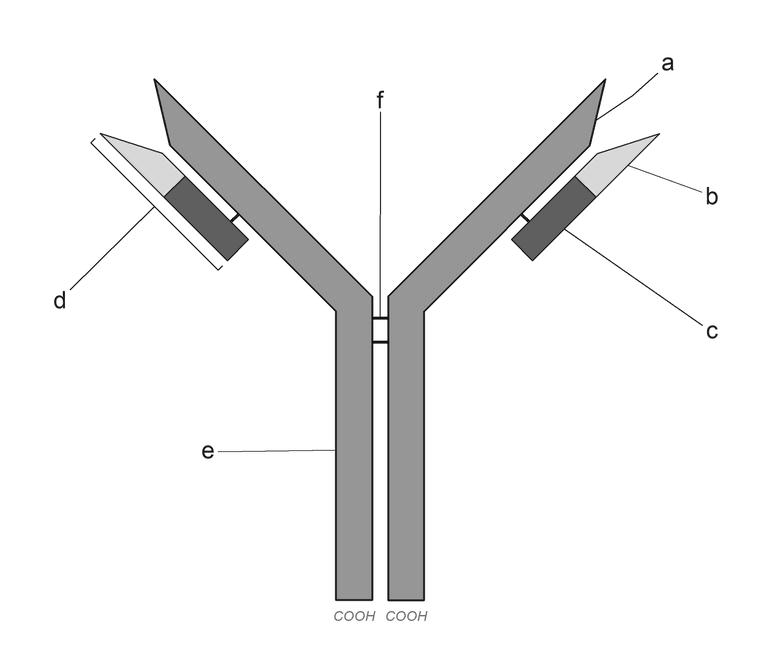
1. Name the parts labelled a to f.
2. State the functions of a.
3. Name the types of specific cells that produce antibodies.
- 343 marks
Question 34
The diagram given below shows the life cycle of a malarial parasite. Study it carefully and answer the questions that follow:
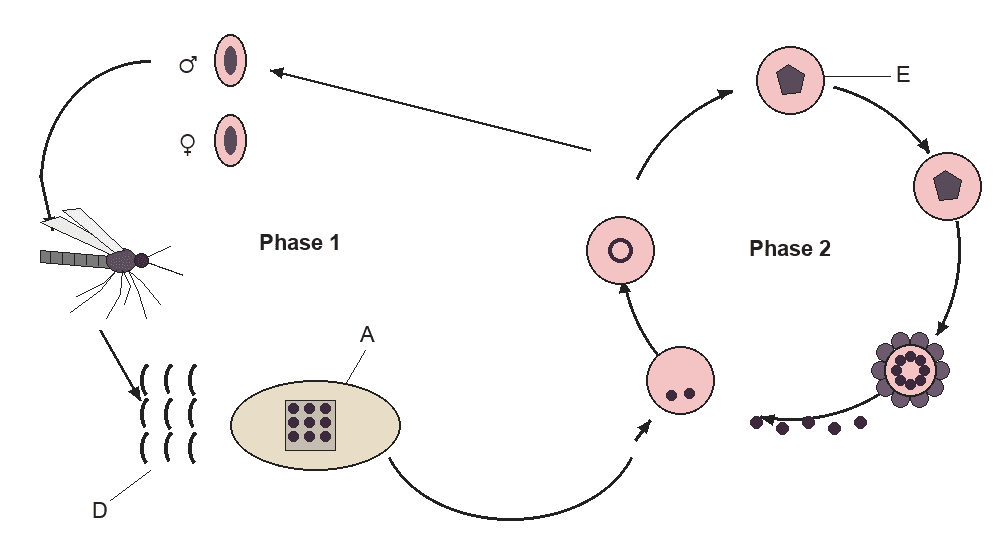
(i) Name the hosts in which the asexual phase and sexual phase of the life cycle take place.
(ii) Identify the infective stage labelled 'D'.
(iii) Name the structures labelled 'A' and 'E'.
(iv) Give any one symptom of malaria.
- 351 mark
Question 35
A couple in Bengaluru lost their first baby at the age of seven months to repeated severe infections; the baby was later found to have severe combined immunodeficiency (SCID). When their second baby is born, the doctors send a blood sample to find out whether this baby, too, has almost no working T and B cells. (Hypothetical case.)
If the test shows that the second baby also has SCID, which of these vaccines would be the most dangerous to give the baby?
- 361 mark
Question 36
Assertion (A): A child born without a thymus suffers repeated viral and fungal infections, even though the child's bone marrow makes B cells in normal numbers.
Reason (R): In the thymus, B lymphocytes mature into the plasma cells that secrete antibodies.
- 372 marks
Question 37
Ananya, a 10-year-old girl in Lucknow, has been losing weight and feels thirsty all the time. Tests show that she has insulin-dependent diabetes, and her blood contains antibodies against the insulin-making cells of her own pancreas. Some parents at her school fear that their children may catch the disease from her. (Hypothetical case.)
(a) What has gone wrong in Ananya's immune system, and why is her disease called an autoimmune disease?
(b) Are the parents' fears justified? Give a reason.
- 382 marks
Question 38
Doctors at a hospital in Hyderabad followed two groups of adults for one year. One group took a tablet every day that strongly reduces the production of acid in the stomach; the other group did not take it. The doctors recorded who had at least one bacterial infection of the gut (for example, food poisoning) during the year. (Hypothetical data.)
Group Number of adults Adults with a bacterial gut infection in the year Took the acid-reducing tablet daily 600 42 Did not take the tablet 800 24 (a) Calculate the percentage of adults with a gut infection in each group. How many times as common were gut infections in the tablet group?
(b) Using what you know about innate immunity, suggest why gut infections were more common in the tablet group.
- 393 marks
Question 39
A cancer hospital in Mumbai reviewed the records of women who had an operation to remove a breast tumour that had not spread to distant organs. (Hypothetical data.)
Treatment after the tumour was removed Number of women Cancer returned within 5 years Surgery only 250 70 Surgery followed by radiotherapy 300 39 After her own operation, Mrs Rao's doctor advises a course of radiotherapy. A relative says, "The lump has been cut out completely, so the radiation can only harm her."
(a) Calculate the percentage of women in each group in whom the cancer returned.
(b) Explain why a cancer can return even after the visible lump has been removed.
(c) Evaluate the relative's view, using the data and what you know about radiotherapy.
- 405 marks
Question 40
An IT company in Pune found that many of its employees were taking frequent sick leave. Most of them sat at their desks for 9 to 10 hours a day, often skipped proper meals, ate fried snacks between meetings and worked late into the night. The company's health officer surveyed 400 employees about their habits over the past year. She grouped them by two habits: doing at least 150 minutes of moderate exercise a week, and sleeping at least 7 hours a night. (Hypothetical data.)
Group Number of employees Total days of sick leave in the year Both habits 120 360 Only one of the two habits 160 720 Neither habit 120 840 (a) Calculate the average number of sick-leave days per employee in each group. What trend do the data show?
(b) The health officer concludes, "Lack of exercise and sleep causes illness." Evaluate whether this survey alone proves her conclusion.
(c) Design a four-point plan the company could start at the workplace to improve its employees' health. Give one reason for each point.